

Having a website is a constant battleground for visibility, where a single high-quality backlink can profoundly shift your search engine rankings. While the internet is awash with advice on link building, much of it overlooks the power of truly authoritative, editorially-placed mentions. This article cuts through the noise, offering a comprehensive roadmap for SEO agencies and business owners to master the acquisition of these invaluable assets.
This manual is for those who understand the foundational importance of backlinks but seek a more sophisticated, white-hat approach to securing them. If you’re an SEO agency striving to deliver superior results for clients, or a business owner aiming to scale your organic search presence without risking penalties, you’ve found your essential guide. We will equip you with the strategies and frameworks used by leading experts to achieve sustainable growth.
At International Outsourcing Group (IOG) we specialise in securing DA60+ DoFollow editorial backlinks through 100% manual outreach on HARO and Qwoted. With 6 years of experience and over 10,000 placements delivered to SEO agencies and business owners worldwide, we know exactly what it takes to earn links that Google rewards. Every placement is DA60+, DoFollow, minimum 5,000 monthly visitors, delivered within 30 days or replaced free, guaranteed. You’re not buying a link — you’re paying for the expertise, journalist relationships, and outreach time required to earn one legitimately. At $399 per link with a minimum order of just 2 links, it’s the most powerful and cost effective link building strategy available. Visit our Link Order page here and get started today.
What You Will Learn About Editorial Backlinks
We begin by Defining the Editorial Advantage, distinguishing journalistic merit from paid placements and exploring the historical success of earned media. You’ll learn the rigorous standards agencies uphold for white-hat links. Next, we’ll help you Distinguish Authority from Typical Guest Posts by examining editorial control, content flow, and the critical DoFollow equity found in news media, detailing the framework for quality.
Understanding what constitutes a valuable link is paramount, so we delve into Metrics Defining High-Quality Backlink Placements. This includes setting Domain Authority benchmarks, identifying traffic minimums for real authority, and vetting site health and relevancy. We then move into practical sourcing, explaining Sourcing Media Opportunities via HARO and Qwoted, covering their mechanics, how to filter high-tier journalist queries, and pitching speed standards.
Beyond HARO, you will master Manual Outreach Frameworks for Engagement, including using platforms like Qwoted for expert networking. We’ll guide you in crafting the perfect expert quote and optimizing subject lines for editors. To ensure your efforts target truly impactful sites, we cover Qualifying Sites with 5,000+ Monthly Visitors, teaching you traffic source analysis, how to identify link farm red flags, and the importance of geographic relevance.
What You Will Learn As An SEO Agency
For those looking to expand their efforts, Scaling Production Through Expert Agency Partnerships explores the costs of outsourcing versus in-house outreach, white-label solutions for SEO agencies, and effective management of bulk editorial orders. We then address the practicalities of investment in Budgeting for $399 Premium DoFollow Links, detailing cost-per-link performance metrics, minimum order requirements for testing, and allocating annual SEO spend for PR.
Realistic expectations are key, so Timeline Expectations for 30-Day Placement Cycles outlines the pitch-to-publication workflow, guaranteed replacement policies, and tracking link longevity and indexing. The ultimate goal is impact, which we measure in Measuring Ranking Impact from DA60+ Domains. Here, we examine the correlation between high DA and rankings, referral traffic, brand visibility, and the long-term equity of “link juice.”
Crucially, this guide also focuses on Avoiding Penalties with White-Hat Acquisition. You’ll learn risk mitigation through manual outreach, how to identify and reject toxic backlinks, and strategies for maintaining E-E-A-T (Experience, Expertise, Authoritativeness, Trustworthiness) through expert sourcing. Finally, we look to the future, with Future-Proofing SEO Strategy with Earned Media, discussing the enduring value of human mentions amidst AI content, integrating editorial links into growth plans, and final steps for agency implementation.
Key Takeaways for SEO Authority
- Quality over quantity is the primary rule, as one DA60+ editorial link often provides more ranking power than dozens of low-tier placements.
- Traffic is the ultimate safety filter, requiring at least 5,000 monthly visitors to verify that a site is not a link farm or a “zombie” domain.
- Manual outreach via HARO and Qwoted eliminates the digital footprints that lead to search engine penalties and manual actions.
- The expert-source model ensures that your brand is integrated naturally into the content, rather than appearing as a forced or sponsored addition.
- A $399 investment per link is justified by the permanent DoFollow status and the high level of manual labor required for successful pitching.
- Consistency in acquisition builds a “link moat” that makes it difficult and expensive for competitors to replicate your search engine positions.
- Professional 30-day delivery cycles and replacement guarantees are essential for managing client expectations and ensuring project ROI.
Transitioning from theoretical knowledge to practical application requires a structured approach to your link-building budget and workflow. Editorial links should be viewed as long-term assets rather than temporary marketing expenses. Because these placements are difficult to acquire, they provide a sustainable competitive advantage that protects your rankings from aggressive competitors. The following steps will help you implement the strategies discussed in this guide to begin scaling your domain authority.
Sequential Steps for Implementation
- Establish a dedicated monthly budget for editorial outreach, using the $399 per link benchmark to project your total annual investment.
- Place a test order of at least two links through IOG to evaluate the quality of the placements and the 30-day workflow.
- Monitor your keyword rankings and brand search volume over a 90-day period to measure the direct impact of your new editorial assets.
Continued learning in the field of editorial backlinks involves staying updated on the evolving quality rater guidelines issued by search engines. As artificial intelligence changes how content is produced, the value of human-edited media will only continue to increase. You should regularly refine your expert commentary to provide unique insights that AI tools cannot replicate. This commitment to genuine expertise will ensure your brand remains a preferred source for journalists and a trusted result for search users.
For those who prefer to focus on their core business operations, professional assistance is available to handle the complexities of manual outreach. You can scale your authority today by visiting internationaloutsourcinggroup.com/white-hat-editorial-backlinks/ to secure your first high-tier placements. The framework provided in this article is a proven path to the top of the search results for those willing to invest in quality. Authority is not granted by search engines but earned through the consistent acquisition of high-tier editorial mentions.
Journalistic Merit vs Paid Placements
Defining an editorial backlink involves understanding its core distinction from other link-building methods. International Outsourcing Group (IOG), a Brisbane, Australia-based firm with six years of experience, defines these as mentions placed naturally within the flow of content by editors. This means the link appears because the content genuinely earned its place, not because it was bought.
Most traditional link-building efforts often include guest posts or sponsored content. These are typically “pay-to-play” scenarios where a fee or reciprocal arrangement secures placement. Such links, while still offering some SEO value, lack the inherent authority and trust Google associates with truly earned media.
Consider the difference between an advertisement and a news story. An ad is paid for, directly promoting a product. A news story, however, reports on something newsworthy, earning its space through journalistic merit. Editorial backlinks operate on this same principle of merit.
The Essence of Earned Media
True earned media signifies content that receives attention because it is valuable, interesting, or newsworthy. For backlinks, this translates into an editor or journalist independently choosing to link to your content. They do this because your resource enhances their article, provides crucial data, or offers unique insight.
Achieving this level of placement requires a fundamental shift in strategy. Instead of asking “Where can I put my link?”, the question becomes “What content can I create that others will naturally want to link to?”. This focus on intrinsic value is what separates editorial links.
The process involves rigorous content creation and strategic outreach designed to highlight genuine value. It is about building relationships and demonstrating expertise, which encourages organic mentions. This method builds a much stronger and more sustainable backlink profile.
Why Editorial Links Matter More
Google’s ranking algorithm places a significantly higher weight on editorial backlinks. This preference stems from the inherent trust signals these links convey. When an independent, reputable source links to your content without payment, it acts as a strong endorsement of its quality and authority.
Acquiring these links is undeniably the hardest part of any SEO strategy. It demands patience, superior content, and a deep understanding of what makes a piece of information newsworthy or editorially relevant. However, the payoff in search engine visibility and domain authority makes the effort worthwhile.
For SEO agencies and business owners, understanding this distinction is crucial for long-term success. Relying solely on paid placements or guest posts will not achieve the same impactful results as a dedicated focus on earning editorial mentions. This is the core of the editorial advantage.
Distinguishing Factors: Paid vs. Earned
Let us break down the key differences between paid placements and genuine editorial links. This clear differentiation helps in developing a more effective and ethical link-building strategy. Recognizing these traits allows you to prioritize efforts that yield the most significant SEO benefits.
Paid Placements (Guest Posts, Sponsored Content)
- Placement is guaranteed: You pay a fee or agree to a reciprocal arrangement to get the link.
- Content control: Often, you write the content or have significant input on its creation.
- Disclosure: Ethical guidelines usually require disclosure that the content is sponsored or paid for.
- Lower trust signal: Google’s algorithms are sophisticated enough to detect and devalue many forms of paid links.
Journalistic Merit (Editorial Backlinks)
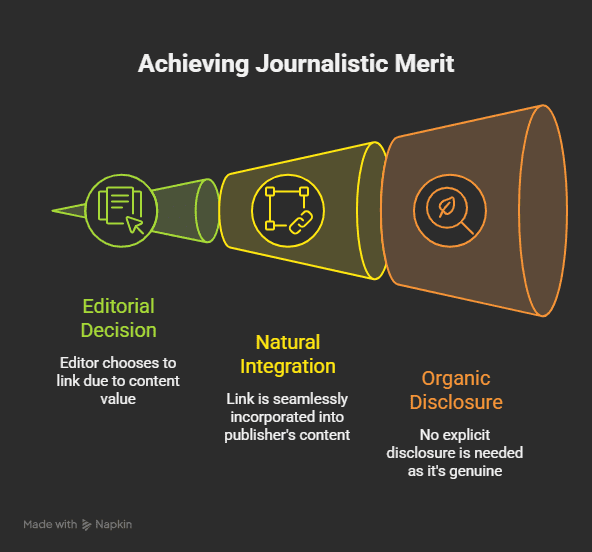
- Placement is earned: The editor or journalist decides to link because your content adds value.
- No content control: The publisher writes their own content and integrates your link naturally.
- No disclosure needed: The link is organic, reflecting genuine editorial judgment.
- Highest trust signal: These links are seen as authentic endorsements, significantly boosting authority.
IOG’s six years of experience in providing editorial links highlight that while standard link building focuses on volume, editorial acquisition prioritizes quality and relevance. This strategic approach ensures that every link earned contributes meaningfully to your overall SEO performance. It moves beyond simply acquiring links to truly building authority.
Practical Application for Agencies and Businesses
Agencies must educate their clients on the long-term benefits of pursuing editorial links. This often means setting realistic expectations for the timeline and effort involved. It also means shifting budget allocations from low-impact paid placements to high-impact content creation and outreach.
Business owners should invest in creating exceptional, data-driven content that solves real problems or offers unique insights. This content serves as the foundation for attracting editorial mentions. Without truly valuable content, even the best outreach strategies will fall short.
Developing a content strategy focused on becoming a go-to resource in your industry is paramount. Think about what kind of information journalists and editors in your niche regularly seek. Then, create that content in a compelling and authoritative manner.
Finally, remember that editorial links are a marathon, not a sprint. They require consistent effort, a commitment to quality, and a strategic understanding of earned media principles. The rewards, however, in terms of organic traffic, brand authority, and sustainable SEO performance, are unparalleled.
Historical Success of Earned Media
Many still believe that any backlink helps SEO. This ignores the critical evolution of search engine algorithms, which now heavily penalize low-quality links. Early SEO strategies often relied on sheer volume from directories or forums, but these tactics offered short-term gains at best. Today, the focus has shifted dramatically toward quality and relevance, making earned media the gold standard for sustainable growth.
The history of link building clearly shows a pattern: methods that game the system fail over time. Google’s algorithm updates, like Penguin, specifically target manipulative link schemes. Websites built on these shaky foundations saw massive traffic drops, while those with genuinely earned links maintained or improved their rankings. This pattern underscores the importance of an ethical, long-term approach to link acquisition.
The Rise of Editorial Backlinks
Modern SEO demands editorial backlinks, which are links naturally placed within high-quality content by a third-party publisher. These links come from articles, blog posts, news pieces, or interviews because the content is genuinely valuable. Publishers choose to link to your site not for payment, but because your resource enhances their own content and provides value to their readers. This organic placement signals strong authority and relevance to search engines.
Achieving these links requires a manual outreach strategy focused on building relationships and offering genuinely useful content. Our Brisbane-based expertise over the past six years confirms this shift. We have delivered over 10,000 editorial backlinks to global clients, proving the scalability of this manual outreach when managed correctly. This volume shows that a strategic, relationship-driven approach consistently yields significant results.
Enduring Algorithm Shifts
One compelling reason to prioritize editorial links is their resilience against algorithm updates. Historical data consistently shows that editorial links survive algorithm changes far better than directory or forum links. Search engines are designed to reward genuine authority and useful content, which is exactly what editorial links represent. They are a vote of confidence from a reputable source, signaling trust and relevance.
Consider the stark contrast between various link types. A link from a niche-relevant blog post written by an expert carries significant weight. In contrast, a link from a generic online directory offers minimal value and often poses a risk. This difference in quality directly impacts a website’s long-term stability and ranking potential, making editorial links a foundational element for any robust SEO strategy.
| Link Type | Impact on SEO Stability | Risk Profile |
|---|---|---|
| Editorial Links | High (Resilient) | Low |
| Directory Links | Low (Volatile) | Medium |
| Forum Links | Low (Volatile) | High |
| PBN Links | Negative (Dangerous) | Very High |
The E-E-A-T Framework
Google’s emphasis on E-E-A-T (Experience, Expertise, Authoritativeness, Trustworthiness) has profoundly influenced link building. This framework assesses the quality and credibility of content and its creators. Editorial backlinks naturally align with E-E-A-T principles because they come from established, authoritative sources. When a respected publication links to your content, it inherently transfers a degree of its own E-E-A-T to your site.
Our six years of experience has shown us a significant shift toward optimizing for E-E-A-T. We focus on creating content that demonstrates clear expertise and then securing links from highly authoritative sites. This two-pronged approach ensures that not only is your content high-quality, but it is also recognized and validated by credible third parties. This validation is key to long-term SEO success, especially in competitive niches.
Developing a strong E-E-A-T profile requires more than just good content; it needs recognition. Editorial backlinks serve as explicit endorsements from other reputable sites, directly contributing to your perceived authority and trustworthiness. This external validation is a powerful signal to search engines, reinforcing your site’s credibility and improving its chances of ranking well for relevant queries. It forms the bedrock of a robust online presence.
Foundation for Long-Term SEO Stability
Ultimately, understanding the historical success of earned media reveals why editorial links are the foundation of long-term SEO stability. They are not a fleeting tactic but a strategic investment in your website’s future. By focusing on genuinely valuable content and securing natural placements, businesses build a link profile that withstands algorithm changes and delivers sustained organic traffic. This approach minimizes risk and maximizes return on investment over time.
For SEO agencies and business owners, this means shifting resources toward content creation and outreach that prioritizes quality over quantity. Instead of chasing easy, low-value links, invest in building relationships with publishers and creating resources they naturally want to cite. This strategy ensures your link building efforts contribute positively to your E-E-A-T and secure your position in search results for years to come. It defines the true editorial advantage.
International Outsourcing Group has been delivering DA60+ DoFollow editorial backlinks for 6 years with over 10,000 placements worldwide — guaranteed within 30 days or replaced free. From $399 per link, it’s the most powerful link building strategy available for SEO agencies and serious business owners. Click here to learn more and place your order.
Agency Standards for White-Hat Links
A recent study by Ahrefs indicates that 90.63% of pages get no organic search traffic, often because they lack high-quality backlinks. Professional SEO agencies understand this challenge and adhere to strict standards for acquiring white-hat links. These benchmarks ensure the links not only pass SEO value but also protect client brands from Google penalties. Agencies prioritize ethical practices to build lasting authority for their clients.
Every professional agency sets a clear benchmark: each placement must be a DoFollow link. This is not negotiable. A DoFollow tag instructs search engines to pass “link equity” or “link juice” from the linking site to your site. Without a DoFollow attribute, the link offers minimal SEO benefit, making the effort largely wasted for ranking purposes. Agencies confirm this attribute before finalizing any placement.
The Importance Of Manual Outreach
One core principle for agencies, especially those like IOG serving both SEO agencies and direct business owners worldwide, is a 100% manual outreach process. This ensures no digital “footprint” that automated tools often leave. Manual outreach means real conversations with real editors and content managers, which builds genuine relationships. This contrasts sharply with bulk email campaigns that often end up in spam folders.
Agencies rigorously avoid tactics like link farms or Private Blog Networks (PBNs). These are collections of websites owned by the same entity, created solely to link to other sites and manipulate search rankings. While they might offer short-term gains, Google’s algorithms are highly effective at detecting and penalizing them. Business owners, in particular, must understand that using these methods carries significant risk, including complete de-indexing from search results.
A key characteristic of a safe, high-authority editorial backlink is its natural integration within relevant content. The link should make sense contextually, providing additional value or information to the reader. It should not feel forced or out of place, which is a common sign of manipulative link building. Editorial discretion plays a large role in accepting such contributions, ensuring the link enhances the article.
Authority And Relevance
Another standard involves the authority and relevance of the linking domain. Agencies assess metrics like Domain Rating (DR) or Domain Authority (DA) to gauge a site’s overall strength. They also ensure the linking site’s content aligns with the client’s industry or niche. A link from a highly authoritative site in an unrelated field provides less value than one from a moderately authoritative, but highly relevant, site.
Agencies also verify the quality of the surrounding content where the backlink will reside. The article or page hosting the link should be well-written, informative, and free of excessive advertisements or spammy links. A high-quality editorial environment reinforces the legitimacy and value of the backlink itself. This attention to detail protects the client’s brand image and SEO standing.
Anchor Text
The anchor text used for the backlink is another critical consideration. Agencies ensure anchor text is natural and varied, avoiding keyword stuffing. Using a diverse range of anchor texts, including branded terms, naked URLs, and partial-match keywords, signals a natural link profile to search engines. Over-optimization of exact-match anchor text can trigger algorithmic red flags.
Maintaining a clean and ethical backlink profile is paramount for long-term SEO success. Agencies understand that Google’s guidelines explicitly prohibit schemes designed to manipulate PageRank, which includes buying or selling links that pass equity. Therefore, every link acquisition strategy focuses on earning links through valuable content and genuine relationships. This commitment to white-hat practices defines an agency’s integrity.
Standards For Business Owners
For business owners, identifying these standard characteristics is vital for evaluating potential SEO partners. Asking about their outreach methods, link attribute requirements, and how they avoid black-hat tactics provides clear insights. An agency that transparently explains their commitment to DoFollow links, manual outreach, and avoiding PBNs demonstrates a robust and ethical approach to link building.
Consider these points when evaluating a potential link opportunity:
- Is the link DoFollow, passing full link equity?
- Does the placement come from 100% manual outreach, avoiding automated tools?
- Is the linking website free from characteristics of a link farm or PBN?
- Is the content surrounding the link high-quality and relevant?
- Does the anchor text seem natural and varied?
Adhering to these stringent agency standards for white-hat links forms the bedrock of an effective and sustainable SEO strategy. It moves beyond simply acquiring links to truly defining an editorial advantage. This approach builds genuine authority and trust with search engines, which ultimately drives organic traffic and long-term business growth.
Editorial Control and Content Flow
Guest posting often misrepresents true editorial authority. With traditional guest posts, the contributor typically writes the entire article, dictating the narrative and content flow. This approach makes it difficult to secure genuine editorial backlinks, which come from independent journalistic judgment.
Real editorial mentions invert this dynamic. Here, a journalist or publication staff writer crafts the piece, integrating your expertise as a source within their existing narrative. You do not control the article’s direction; you contribute specific insights or data points to support their story.
This fundamental shift in content ownership distinguishes an editorial backlink from a typical guest post. Your role moves from author to expert, providing value that complements the publication’s journalistic goals. This method helps avoid the appearance of sponsored content, which search engines and readers increasingly scrutinize.
The Journalist’s Narrative Priority
Achieving editorial backlinks requires prioritizing the journalist’s story above your own promotional agenda. Your contribution must serve the publication’s audience and content strategy. This means you offer information that enriches their article, rather than using their platform solely to promote your brand.
This approach significantly reduces the risk of a ‘sponsored’ or ‘advertorial’ tag on your mention. Publications uphold their editorial integrity by ensuring content originates from their own staff and serves their readership first. Your inclusion as an expert source reinforces this integrity.
In practice, this often involves a conversation or interview with a journalist, where they extract the information they need. You do not submit a pre-written article. Instead, you provide insights that the journalist then weaves into their piece, attributing them correctly to you or your business.
Consider the contrast between submitting a finished article and being quoted. One allows full control; the other offers authority through association. The latter is the essence of an editorial backlink, demonstrating genuine trust from a third party.
| Aspect | Guest Post | Editorial Backlink |
|---|---|---|
| Content Creator | Contributor | Journalist/Editor |
| Narrative Control | Contributor | Publication |
| Role of Business | Author/Promoter | Expert Source |
| Content Goal | Self-promotion | Inform reader |
IOG Methods and Expert Sourcing
Our IOG method specifically targets this expert-source model for securing editorial backlinks. It focuses on identifying opportunities where your expertise naturally fits into a journalist’s ongoing work. This involves pitching relevant data, unique perspectives, or expert commentary.
This method has proven highly effective in generating authentic mentions. Over 10,000 links delivered to IOG clients follow this expert-source model. This track record demonstrates the viability and scale of this approach for SEO agencies and business owners seeking high-authority backlinks.
The success stems from aligning your value with the journalist’s need for credible sources. You become a valuable resource, not just another submission. This organic integration into news and feature articles is what search engines value as a strong signal of authority.
Understanding this distinction in content structure is crucial for any SEO agency or business owner. Moving beyond traditional guest posting to embrace true editorial control helps you secure the most impactful and authoritative backlinks available.
DoFollow Equity in News Media
Many SEO agencies and business owners fundamentally misunderstand the true value of a news media backlink. Most public relations efforts secure mentions, but these links often carry little to no SEO weight because they are NoFollow by default.
Understanding this distinction is crucial for evaluating the return on investment for any link-building strategy. A NoFollow attribute tells search engines not to pass authority from the linking page to your site, effectively making it a mention without SEO equity.
The Critical Role of DoFollow Links
Editorial backlinks, particularly those from reputable news media, offer significant SEO advantages, but only if they are DoFollow. This attribute signals to search engine crawlers that the link should pass link equity, also known as “link juice” or “PageRank,” from the source site to the destination.
Such equity directly contributes to your domain’s authority and search engine rankings. Without a DoFollow tag, even a placement on a top-tier news site becomes primarily a branding exercise, offering minimal direct SEO benefit.
IOG’s Guarantee and Manual Outreach
IOG guarantees DoFollow status for all its placements, a critical differentiator in the link-building landscape. This guarantee is not a small detail; it is the core of our value proposition.
Achieving DoFollow status on news sites requires a meticulous, manual outreach process. Many news outlets configure their content management systems to automatically assign a NoFollow attribute to external links, especially those perceived as promotional.
Why Manual Outreach Matters
Overcoming the default NoFollow setting on major news platforms demands specific strategies and established relationships. IOG’s team engages in direct, personalized communication with editors and journalists, advocating for the DoFollow attribute based on the editorial merit of the content.
This approach moves beyond simply “getting a mention”; it focuses on securing a link that actively contributes to your site’s SEO profile. The manual effort ensures that the link truly functions as an endorsement in the eyes of search engines.
Justifying the Investment: $399 Per Link
An investment of $399 per link through IOG is justified by the permanent DoFollow nature of the placement. This price reflects the intensive manual labor, established media relationships, and the guaranteed SEO value that comes with each link.
Consider the alternative: a free or low-cost PR mention that offers no DoFollow equity. While visibility is gained, the direct impact on search rankings remains negligible, making the “cost” of a non-DoFollow link, in terms of lost SEO opportunity, much higher.
International Outsourcing Group has been delivering DA60+ DoFollow editorial backlinks for 6 years with over 10,000 placements worldwide — guaranteed within 30 days or replaced free. From $399 per link, it’s the most powerful link building strategy available for SEO agencies and serious business owners. Click here to learn more and place your order.
Long-Term SEO Equity
DoFollow editorial links from authoritative news sources provide enduring SEO benefits. These links are not temporary; they remain on the publisher’s site, continuously passing authority to your domain.
This long-term equity builds a strong, defensible backlink profile that resists algorithm updates and sustains ranking improvements over time. It’s an asset that appreciates, unlike short-lived promotional efforts.
Evaluating SEO Equity: DoFollow vs. NoFollow
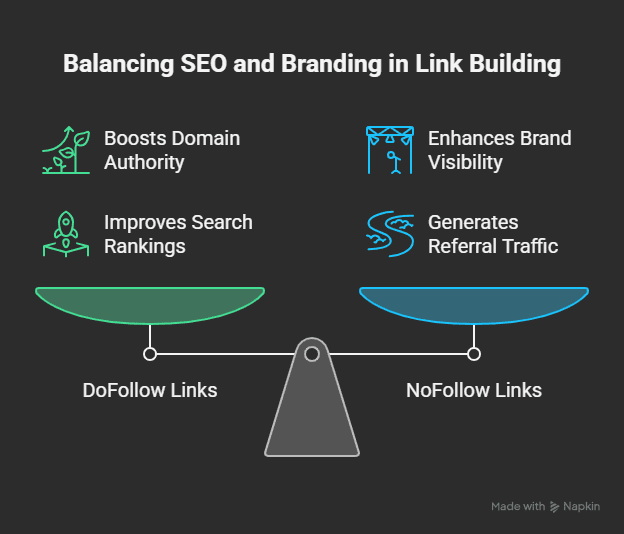
Business owners and SEO agencies must evaluate the fundamental difference in SEO equity between DoFollow editorial links and standard NoFollow PR mentions. A NoFollow link may drive referral traffic or build brand awareness, which are valuable in their own right.
However, only a DoFollow link directly influences your site’s authority and organic search rankings. The distinction is not merely technical; it represents a significant divergence in strategic outcomes.
- DoFollow Editorial Links: Directly contribute to domain authority, pass PageRank, and improve search rankings. They are a core component of a strong SEO strategy.
- NoFollow PR Mentions: Offer branding, referral traffic, and visibility, but do not directly impact search engine authority or rankings.
Therefore, when comparing link-building options, agencies should prioritize the DoFollow attribute. A link from a major news publisher without this attribute is akin to a car without an engine for SEO purposes.
The strategic choice impacts budget allocation and campaign goals. Investing in DoFollow links is an investment in your site’s fundamental search engine authority, while NoFollow links serve broader marketing objectives.
Agency Framework for Quality
Simply aiming for “high-quality” backlinks often leads to vague goals and inconsistent results. A more effective approach involves adopting a structured framework, like the operational model developed by IOG. Over six years of editorial link building, has refined our process for securing editorial links from high-tier news outlets and niche authority sites, delivering over 10,000 links globally from its Australian base.
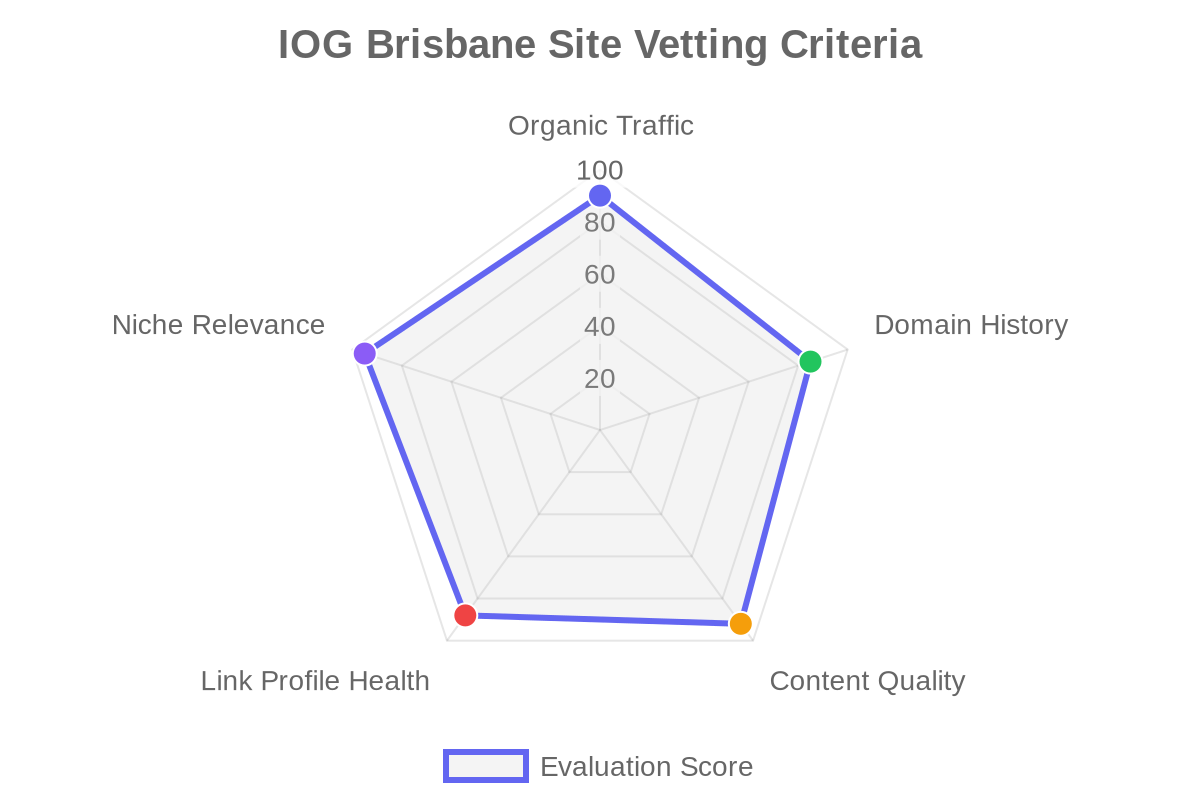
This success stems from a clear focus on specific vetting criteria, moving beyond generic metrics that many agencies still rely on. This framework helps distinguish genuine authority sites from those merely appearing strong on the surface. Understanding and applying these principles can significantly improve your own link-building efforts, ensuring you invest in truly impactful placements.
Vetting for Organic Traffic and Domain Health
Many link builders prioritize Domain Authority (DA) or Domain Rating (DR) as primary indicators of site quality. However, the IOG framework considers these metrics as starting points, not definitive measures. They emphasize actual organic traffic as a far more reliable signal of a site’s real-world authority and relevance, showing that Google trusts the site enough to rank its content.
A site with robust organic traffic demonstrates consistent content quality and user engagement, which are critical for an editorial backlink to carry weight. The agency rigorously vets potential placements to confirm a healthy, upward trend in organic visibility. This step helps avoid sites that might have inflated metrics but little actual search presence or audience.
Domain Health
Furthermore, assessing domain health goes beyond just traffic numbers. This involves a deep dive into factors like backlink profile cleanliness, absence of spammy linking practices, and a natural anchor text distribution. A clean backlink profile suggests the site earns its links editorially, mirroring the very quality you seek for your own placements.
Stong models also scrutinizes the site’s content strategy. They look for consistent publication of well-researched, original articles that align with the site’s stated niche. This ensures that the editorial environment is genuinely authoritative and not merely a content farm designed for guest posts, which often lack true editorial oversight.
Beyond Surface-Level Metrics
A common pitfall in link building is to chase sites based solely on high DA/DR scores, often overlooking the editorial context. The IOG framework teaches that a site’s editorial integrity is paramount. This means evaluating whether the site consistently publishes expert-level content and maintains strict editorial guidelines, similar to how a traditional newsroom operates.
They specifically target sites that exhibit clear signs of editorial control, where content undergoes review before publication. This process ensures that any link placed within an article is genuinely relevant and adds value to the reader, rather than appearing as a forced insertion. Such placements are far more effective at conveying authority and trust to search engines.
Site Reputation
The agency also considers the site’s reputation within its specific industry. A true authority site is recognized by peers and experts in its field, often cited by other reputable sources. This peer validation provides an additional layer of assurance that the backlink comes from a genuinely influential platform, enhancing its perceived value.
This meticulous vetting process helps differentiate a valuable editorial backlink from a typical guest post, even if the latter appears on a high-metric site. A standard guest post often lacks the deeper editorial integration and organic context that defines an authoritative placement. The Brisbane model teaches that context and intent matter as much as, if not more than, raw numbers.
Practical Application for Agencies and Business Owners
To apply this framework, start by shifting your focus from solely chasing high DA/DR to actively investigating a prospect’s organic traffic trends. Use tools like Ahrefs or Semrush to analyze monthly organic traffic volume and its historical performance. Look for consistent growth and stability, avoiding sites with sudden drops or erratic patterns.
Next, perform a manual review of the site’s content. Examine the quality of writing, the depth of research, and the presence of author bios with genuine credentials. Check for obvious signs of excessive sponsored content or irrelevant articles that dilute the site’s niche focus. A healthy site maintains a clear editorial voice and thematic consistency.
Investigations Are Recommended
Investigate the site’s backlink profile using a reputable SEO tool to identify any red flags, such as links from spammy directories or PBNs. A clean and diverse backlink profile indicates a site that earns its authority organically. This comprehensive approach helps you replicate the rigor of the IOG Brisbane model, even on a smaller scale.
Finally, consider the overall user experience. Does the website load quickly? Is it easy to navigate? Does it provide a positive experience for visitors? These factors indirectly reflect the site’s health and its commitment to quality, which ultimately influences the value of any backlink it provides. Adopting this holistic view ensures you secure links that truly contribute to your SEO goals.
Domain Authority Benchmarks for Success
Understanding Domain Authority (DA) helps you set realistic targets for your link-building campaigns. Moz developed DA as a search engine ranking score, predicting how well a website ranks on search engine result pages. This metric ranges from 1 to 100, with higher scores indicating a greater likelihood of ranking. It aggregates many factors into a single score.
Many SEO agencies, including IOG, set a minimum DA standard for editorial backlink placements. Our internal policy at IOG requires all editorial orders to meet a minimum of DA60+. This benchmark ensures the backlinks you acquire provide substantial value. Focusing on higher DA sites significantly impacts your SEO performance.
A common misconception is that DA is a linear scale. It is not. Instead, DA operates on a logarithmic scale. This means the jump from DA30 to DA40 is much easier to achieve than the jump from DA60 to DA70. The power difference between a DA60 site and a DA30 site is substantial, not merely double. A DA60 placement delivers exponentially more authority than a DA30 placement.
The Logarithmic Nature of Domain Authority
Grasping the logarithmic scale of DA is crucial for effective strategy. For example, improving a site from DA20 to DA30 might happen relatively quickly with consistent effort. However, moving from DA60 to DA70 demands significantly more authority and trust signals. This non-linear progression shapes how you prioritize your link acquisition efforts.
Consider the effort required to increase a site’s DA. Early improvements are often the result of foundational SEO work and initial link building. Reaching the higher tiers, like DA70 or DA80, usually requires a long-term, high-quality content strategy paired with powerful editorial backlinks. This explains why IOG focuses on DA60+ placements.
| DA Range | Relative Difficulty | Impact on SEO |
|---|---|---|
| 1-30 | Easy to Moderate | Foundational Growth |
| 31-59 | Moderate to Hard | Steady Improvement |
| 60-79 | Very Hard | Significant Authority Boost |
| 80-100 | Extremely Hard | Industry Leader Status |
Setting Realistic Authority Targets
Establishing proper authority targets for your link-building campaigns prevents wasted resources. Chasing low-DA links in high volume often yields diminishing returns. Instead, prioritize quality over quantity, especially when aiming for significant SEO gains. A single DA60+ editorial backlink can outweigh dozens of lower-quality links.
Agencies and business owners should align their link-building goals with the logarithmic nature of DA. If your site is currently DA30, acquiring DA60+ links will provide a stronger boost than acquiring more DA30-40 links. This targeted approach accelerates your domain’s authority growth. It pushes your site into a more competitive ranking position faster.
Regularly auditing your backlink profile helps you understand your current standing. Identify gaps where higher DA links could provide a strategic advantage. This process involves analyzing competitor backlink profiles too. See where top-ranking sites acquire their powerful links and use this as a guide for your own strategy.
| Client DA | Recommended Target DA for Backlinks | Strategy Focus |
|---|---|---|
| Under 30 | DA40-50 | Build foundational trust |
| 30-50 | DA50-60 | Increase competitive edge |
| 50-70 | DA60-70+ | Solidify authority, IOG standard |
| Over 70 | DA70-80+ | Maintain leadership |
Why IOG Specializes in DA60+ Placements
IOG’s commitment to DA60+ placements stems from a deep understanding of link efficacy. We recognize that securing backlinks from highly authoritative websites provides the most significant SEO impact. This focus helps our clients achieve superior ranking improvements. It ensures every investment in an editorial backlink translates into tangible value.
Our specialization means we have established relationships and processes to consistently deliver these high-tier placements. We avoid the temptation to offer cheaper, lower-quality links that provide minimal benefit. This rigorous standard aligns with the overall chapter theme: “Metrics Defining High-Quality Backlink Placements.” It reinforces our dedication to true quality.
For business owners and SEO agencies, understanding this benchmark empowers you. You can confidently demand higher-quality placements, knowing they deliver superior results. Do not settle for anything less than what truly moves the needle for your organic search performance. High-quality editorial backlinks are an investment, so choose wisely.
Traffic Minimums for Real Authority
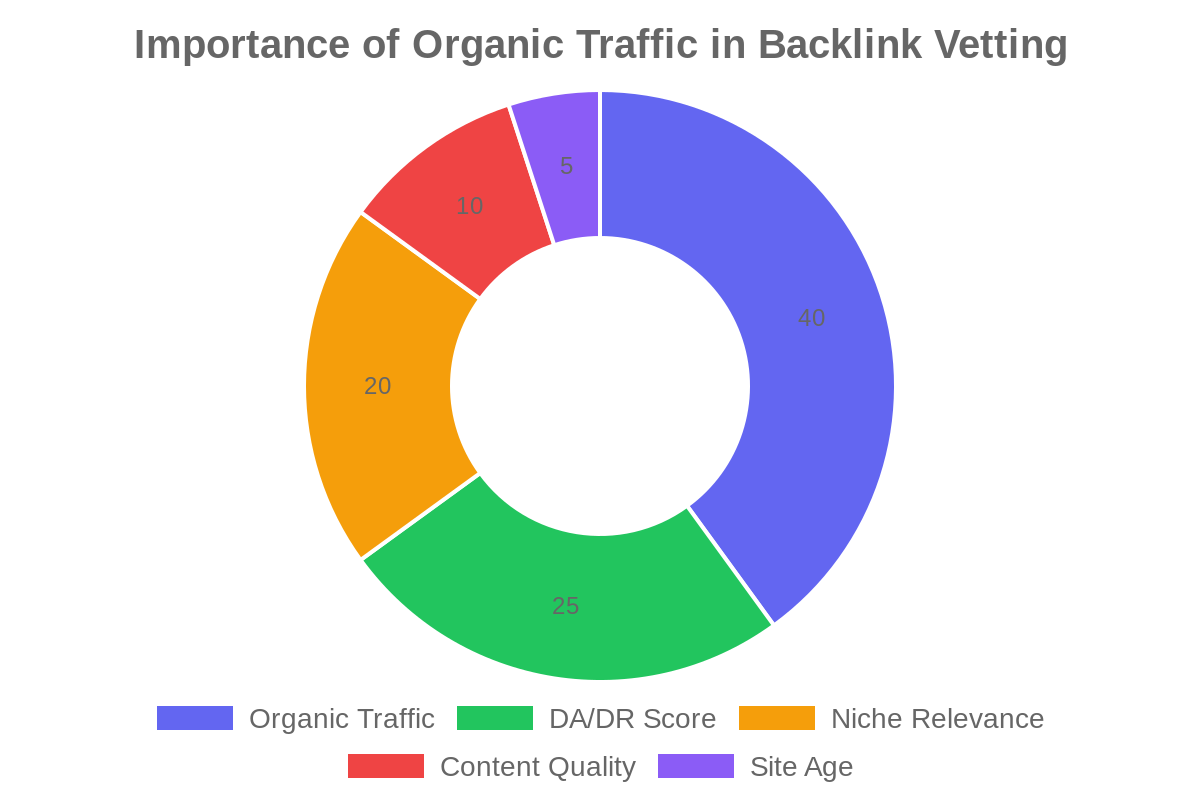
A website’s Domain Authority (DA) score often guides initial backlink outreach, but it tells only part of the story. High DA means little if that website attracts zero organic visitors. Focusing solely on DA can lead agencies and business owners to acquire links from “zombie” websites or link farms, which look good on paper but offer no real SEO value.
Real authority stems from a website’s ability to draw and engage an audience. This engagement is best measured through consistent organic traffic. A site actively receiving visitors from search engines signals that Google perceives it as relevant and trustworthy, making its outbound links more impactful.
Setting a Baseline for Organic Traffic
To ensure a backlink placement holds genuine value, establishing a clear traffic minimum is essential. This threshold acts as a crucial filter, separating truly authoritative sites from those merely mimicking authority through inflated metrics or outdated content. Without this baseline, you risk investing in placements that Google largely ignores.
Our standard at IOG mandates a minimum of 5,000 monthly organic visitors for every backlink placement. This specific figure is not arbitrary; it indicates a website is “alive” in Google’s eyes, regularly indexed, and actively serving user queries. Websites falling below this threshold often lack consistent content updates, user engagement, or a strong search presence.
Minimum Traffic Standards
This minimum traffic requirement acts as a practical safeguard against acquiring links from neglected or penalized domains. A site with 5,000 monthly organic visitors demonstrates ongoing effort and relevance. It shows that the site provides value to users, which is a core principle for effective SEO.
Consider the implications: a link from a site with substantial organic traffic means your content is placed where real people will see it and where search engine crawlers frequently visit. This increases the likelihood of referral traffic and improves the overall discoverability of your linked content. In practice, 100% of IOG’s 10,000+ editorial links meet this rigorous 5,000 monthly visitor threshold.
Why Traffic Outweighs Other Metrics
While metrics like Domain Rating (DR) or Domain Authority (DA) offer a glimpse into a site’s overall strength, they do not directly measure user engagement or current search visibility. A high DA score can sometimes be a legacy of past authority, even if the site has since become inactive or irrelevant. Organic traffic, however, provides a real-time snapshot of a website’s current performance.
Websites with consistent organic traffic have a stronger likelihood of passing “link juice” because they are actively participating in the search ecosystem. Google values links from sites that users find helpful, which is directly reflected in their traffic numbers. This makes traffic a more reliable indicator of a site’s actual authority than static domain scores alone.
Furthermore, evaluating traffic helps identify legitimate platforms versus those built solely for link selling. Link farms often have high DA scores but negligible organic traffic, as their primary purpose is to host links, not to serve an audience. Filtering by traffic minimums effectively weeds out these less valuable placements.
Organic Traffic Metrics
Agencies and business owners should integrate organic traffic analysis into their vetting process for every potential backlink opportunity. Tools like Ahrefs, Semrush, or Similarweb can provide estimated organic traffic data. Always look for trends; a site with declining traffic, even if it currently meets the 5,000 visitor minimum, might be a red flag.
Understanding the distribution of organic traffic also proves beneficial. A site might have 5,000 visitors, but if 90% of that traffic comes from a single, irrelevant keyword, its overall authority for your niche might be limited. Look for a diverse traffic profile that aligns with your target audience.
Implementing Traffic Filters in Your Strategy
Integrating a traffic minimum into your backlink acquisition strategy is straightforward but impactful. Begin by using SEO tools to pull estimated organic traffic data for any prospective linking domains. Discard any website that consistently falls below your established minimum, such as the IOG standard of 5,000 monthly visitors. This simple step saves time and resources.
Next, educate your team or outreach specialists on the importance of this metric. Ensure they understand that a high DA is a starting point, not an endpoint, for evaluation. Their focus should shift towards identifying active, thriving websites that demonstrate genuine user engagement through organic search.
Regular Reviews Are Essential
Regularly review your existing backlink profile against this traffic standard. You might uncover older links pointing to sites that have become inactive. While you cannot remove these, understanding their current status helps inform future strategy and resource allocation. Prioritize earning new links from sites that meet or exceed your traffic requirements.
Finally, remember that editorial backlinks are about building trust and credibility. Placing your content on a site with real organic traffic means your message reaches a relevant audience. This direct exposure, combined with the SEO benefits, makes traffic minimums a non-negotiable aspect of any high-quality backlink strategy.
Vetting Site Health and Relevancy
Securing an editorial backlink from a high-quality website is only half the battle; the other half involves meticulously checking that site’s health and true relevancy. Many SEO agencies rely solely on domain authority (DA) or similar surface-level metrics, but these often hide deeper issues. A genuine assessment requires looking beyond these numbers to understand the site’s true value.
Consider a website showing a high DA score but a sudden, massive spike in traffic followed by a sharp decline. This pattern suggests a temporary anomaly, perhaps from a viral post or a paid traffic campaign, rather than sustained organic growth. We prioritize sites demonstrating consistent traffic trends over several months or even years, which indicates a stable and engaged audience. Steady traffic signals a healthy site with genuine reader interest.
International Outsourcing Group has been delivering DA60+ DoFollow editorial backlinks for 6 years with over 10,000 placements worldwide — guaranteed within 30 days or replaced free. From $399 per link, it’s the most powerful link building strategy available for SEO agencies and serious business owners. Click here to learn more and place your order.
Beyond Automated Metrics: The Manual Audit
Effective backlink placement demands a human touch that automated tools simply cannot replicate. Our IOG Brisbane team, for example, conducts a manual audit of every potential site. This process goes beyond checking basic metrics; it involves a deep dive into the site’s content quality, user experience, and overall editorial standards. We scrutinize the site as if we were a regular visitor, ensuring it meets high standards.
This hands-on vetting prevents placement on sites that appear strong on paper but are actually low-quality. A site might have a decent DA, but if its content is thin, poorly written, or filled with spammy ads, the backlink will offer little value. Manual review helps us identify these red flags, protecting our clients from associating with detrimental online properties.
Spotting Red Flags: “Write For Us” Pages and Link Malls
One common pitfall when evaluating sites is the presence of “Write for Us” pages that function as obvious link malls. These pages often feature generic submission guidelines and openly invite guest posts from anyone willing to pay or provide a link. Such sites are typically designed primarily to sell backlinks, not to publish valuable content for an audience.
You can identify these low-quality opportunities by looking for overly broad content categories, a lack of strict editorial standards, or an abundance of unrelated external links within articles. Placing an editorial backlink on such a site dilutes its authority and can even flag your site as participating in manipulative link schemes. Always avoid sites that appear to be primarily in the business of selling links rather than publishing quality content.
Ensuring True Relevancy Through Outreach
Achieving genuine relevancy for your editorial backlinks requires a targeted and ethical approach to outreach. Our strategy involves 100% manual outreach on platforms like HARO (Help A Reporter Out) and Qwoted. These platforms connect journalists and content creators with expert sources for their articles, ensuring a natural fit.
When you respond to a HARO query, you are providing expertise that directly addresses a journalist’s need, which means your contribution is inherently relevant to their content. This method stands in stark contrast to mass email campaigns or link farms, which often yield irrelevant and low-quality placements. Using HARO and Qwoted guarantees that the resulting backlink is contextually relevant and editorially earned.
The manual nature of this outreach means every connection is built on genuine interest and mutual benefit. We provide valuable insights, and in return, our clients receive editorial mentions from reputable sources. This focus on authentic engagement elevates the quality and impact of each backlink, far surpassing what automated or transactional methods can deliver.
The Outcome: A Safer and Stronger Link Profile
By conducting a thorough manual site audit, you ensure the safety and strength of your backlink profile. This meticulous vetting process protects your website from penalties associated with low-quality or spammy links, which search engines actively penalize. A clean and relevant link profile is fundamental for long-term SEO success.
Focusing on consistent traffic trends, performing manual site reviews, and engaging in ethical outreach methods like HARO and Qwoted creates a robust backlink strategy. This approach not only secures high-quality placements but also builds a foundation of trust and authority with search engines. Your goal is to earn editorial backlinks that genuinely enhance your site’s credibility, not just its numerical metrics.
Help A Reporter Out Mechanics
While many outreach strategies involve cold emailing, using Help A Reporter Out (HARO) offers a direct pipeline to journalists actively seeking sources. This platform flips the traditional outreach model, presenting you with media queries instead of requiring you to hunt for contacts. It is a 100% manual outreach channel, which means every response demands human attention and expertise.
HARO operates by delivering three daily emails, sent at specific times: 5:35 AM, 12:35 PM, and 5:35 PM EST, Monday through Friday. Each email contains hundreds of queries from journalists across various beats. Agencies like IOG have leveraged HARO extensively, crediting it as a primary source for their impressive record of over 10,000 links.
Navigating the HARO Dashboard and Queries
Registering for HARO is straightforward, allowing you to select categories relevant to your expertise or your client’s industry. These categories filter the queries you receive, helping to manage the volume of information. For example, if your client specializes in finance, you would select categories like “Business & Finance” to receive targeted requests.
Upon receiving the daily emails, you will find a compilation of all queries, organized by category. Each query includes the journalist’s request, a deadline, and often specific requirements for the source. Reading these carefully is essential because it informs your response and ensures you meet the journalist’s exact needs.
Speed as a Critical Factor
Responding quickly to HARO queries is paramount for success. Most journalists review and select sources within a narrow window, typically 2-4 hours after sending their query. This rapid turnaround means you need to act fast once a relevant query hits your inbox. Delaying your response often means missing the opportunity entirely, as journalists move quickly to meet their own deadlines.
Establishing a system to monitor HARO emails consistently throughout the day becomes vital. For many agencies, this involves assigning a dedicated team member to check the incoming emails at the exact release times. Being among the first to submit a well-crafted response significantly increases your chances of being chosen.
Crafting an Effective HARO Pitch
A successful HARO pitch is concise, relevant, and directly addresses the journalist’s query. Begin by clearly stating your expertise or your client’s authority on the topic. Provide specific, actionable insights or unique data points that add value to their story. Avoid generic statements and focus on demonstrating genuine knowledge.
Many journalists appreciate pitches that include a brief bio of the source and a professional headshot. This helps them visualize who they are quoting and adds credibility to your response. Always ensure your pitch adheres to any specific length or format requirements outlined in the query itself.
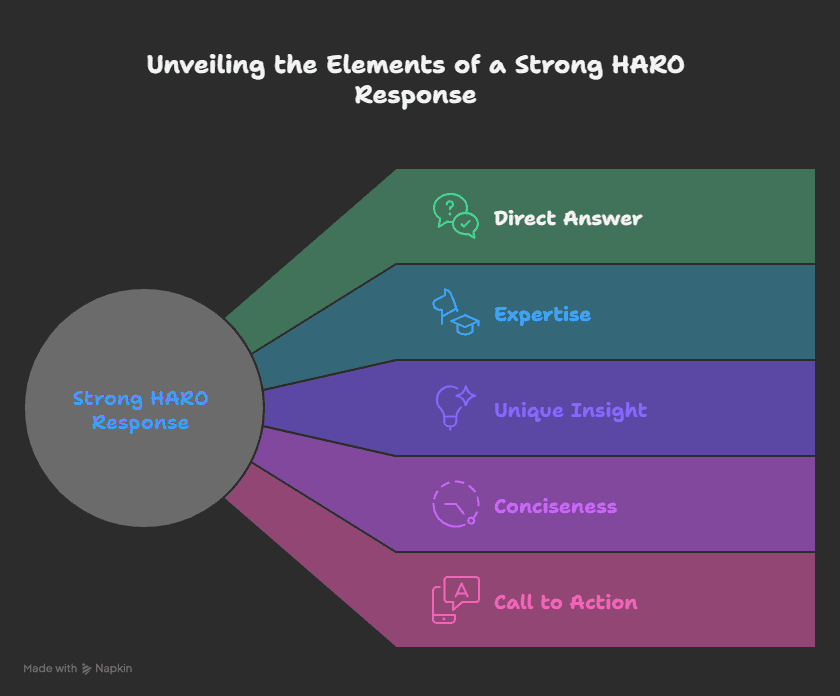
Key Elements of a Strong HARO Response
To maximize your chances of securing an editorial backlink, structure your HARO pitch with clarity and impact. Consider these elements when drafting your response:
- Direct Answer: Immediately address the journalist’s question or topic. Do not make them search for your main point.
- Expertise: Briefly explain your or your client’s qualifications. Why are you the best person to speak on this subject?
- Unique Insight: Offer a fresh perspective, a specific example, or data that enhances their story.
- Conciseness: Keep your response brief and to the point. Journalists receive many pitches, so respect their time.
- Call to Action (Optional): Offer to provide further details or an interview, but only if appropriate for the query.
The Manual Effort Behind HARO Success
Unlike automated link-building tactics, HARO demands consistent, manual effort. Each query requires careful review, thoughtful response crafting, and prompt submission. This hands-on approach ensures the quality and relevance of your pitches, which is why it remains a highly effective method for securing high-authority editorial backlinks.
The sustained success of agencies using HARO, such as IOG’s 10,000+ links, underscores the value of this manual process. It is about building relationships and providing genuine value to journalists, which translates into powerful, contextual backlinks for your website or your clients. Treating HARO as a strategic, daily task yields significant long-term results.
Filtering High-Tier Journalist Queries
Every morning, your inbox floods with HARO queries. Most of these requests come from small blogs or unestablished websites. Sifting through this volume to find valuable opportunities requires a strategic approach, which is why selective pitching becomes essential for securing high-quality editorial backlinks.
Ignoring the noise means focusing your efforts where they count most. This targeted strategy saves significant time and resources. It ensures you only pursue placements that truly move the needle for your clients or business, delivering a stronger return on investment for your SEO efforts.
Prioritizing Authority and Traffic
Not all HARO queries are equal in terms of SEO value. A backlink from a niche blog with minimal traffic provides far less impact than one from a major publication. Our internal process at IOG, for example, rigorously filters for sites with a Domain Authority (DA) of 60 or higher.
This DA threshold serves as a strong indicator of a website’s overall authority and trustworthiness in Google’s eyes. Additionally, we look for sites receiving at least 5,000 organic traffic visitors per month. These two metrics combined help us identify publications that offer significant SEO benefits.
Only a fraction of HARO requests meet these strict criteria. By consistently applying such filters, you ensure that every pitch you send has the potential to yield a truly impactful backlink. This disciplined approach is a cornerstone of effective backlink acquisition.
Distinguishing Big Media from Small Blogs
The difference between a “Big Media” outlet and a small blog is profound for SEO. Big Media sites often have millions of monthly visitors and decades of established authority. A backlink from such a source sends a powerful signal to search engines about your own site’s credibility.
Small blogs, while sometimes offering relevant content, typically lack the domain authority and traffic volume to provide significant SEO juice. Focusing your HARO efforts exclusively on high-tier publications maximizes the impact of each successful placement. It is a strategic choice to optimize your time and resources.
| Criterion | Big Media Opportunity | Small Blog Opportunity |
|---|---|---|
| Domain Authority (DA) | DA 60+ | DA < 60 |
| Monthly Organic Traffic | 5,000+ visitors | < 5,000 visitors |
| SEO Impact | High | Low to Moderate |
| Brand Visibility | Significant | Limited |
Manual Filtering for Quality Assurance
While automated tools can help with initial sorting, manual filtering remains critical for true quality assurance. At IOG, every single HARO query undergoes human review against our strict criteria. This meticulous process is precisely why we can guarantee high-quality placements for our clients.
A query might appear promising based on its headline, but a quick check of the publication’s website might reveal it falls short of the DA or traffic requirements. Human judgment can also identify nuances, such as whether the journalist’s specific angle truly aligns with your expertise. This adds a layer of precision that algorithms cannot replicate.
This hands-on approach catches opportunities that automated filters might miss, or, more commonly, discards those that don’t quite fit the quality standards. It is an investment in time that pays off by preventing wasted pitches on low-value prospects. The ultimate goal is to connect with journalists writing for reputable sources.
Verifying Publication Metrics
Before responding to any HARO query, always verify the publication’s key metrics. Tools like Ahrefs, Moz, or Semrush provide reliable data on Domain Authority (or Domain Rating) and estimated organic traffic. These metrics are crucial for assessing the true value of a potential backlink.
A quick check can save you hours of writing pitches for sites that will not deliver the desired SEO impact. For example, if a query comes from a site with a DA of 35 and only 1,000 monthly visitors, it likely falls outside the “high-tier” category. Focus your energy on publications that meet your minimum thresholds.
This verification process should become a standard part of your HARO workflow. Establish your own minimum DA and traffic requirements, similar to IOG’s DA60+ and 5,000+ traffic rule. Sticking to these guidelines ensures your efforts are consistently directed towards securing valuable editorial backlinks.
Developing an Efficient Filtering Workflow
An efficient filtering workflow starts with a clear set of criteria. As soon as HARO emails arrive, quickly scan the subject lines and journalist names. Prioritize queries that mention well-known publications or topics directly relevant to your expertise.
Next, for promising queries, immediately cross-reference the publication’s domain against your chosen authority and traffic metrics. Create a simple spreadsheet or use a project management tool to track queries that meet your standards. This helps you manage the volume and focus only on the most valuable opportunities.
By streamlining this process, you reduce the time spent on unqualified leads. You can dedicate more energy to crafting compelling pitches for high-tier journalists. This systematic approach transforms HARO from a chaotic inbox into a powerful tool for strategic backlink acquisition.
Agency Pitching Speed Standards
Failing to respond quickly to media queries often means missing out on valuable editorial backlink opportunities. Agencies and business owners must develop a rapid-response system for media pitching, especially when using platforms like HARO (Help A Reporter Out).
Achieving a 30-day delivery cycle for editorial backlinks requires immediate action on incoming queries. Delays, even by a few hours, can result in a journalist finding another source and closing their request. This makes speed a critical factor for success in competitive media outreach.
International Outsourcing Group has been delivering DA60+ DoFollow editorial backlinks for 6 years with over 10,000 placements worldwide — guaranteed within 30 days or replaced free. From $399 per link, it’s the most powerful link building strategy available for SEO agencies and serious business owners. Click here to learn more and place your order.
Operational Efficiency in Outreach
Optimizing your outreach operations directly impacts your success rate with editorial backlinks. This involves more than just writing a good pitch; it means structuring your workflow to minimize friction and maximize response times. Many agencies underestimate the logistical challenges of consistent, high-volume pitching.
A core component of efficient outreach is understanding the time sensitivity of media requests. Journalists work under tight deadlines, and their queries often expire within hours. Your system needs to account for this inherent urgency to remain competitive.
Timing Pitches for Global Zones
One major challenge for agencies operating in different time zones is aligning their pitch delivery with journalist working hours. IOG Brisbane, for example, has developed six years of experience timing pitches specifically for US and UK time zones. This expertise allows them to submit responses when journalists are most likely to see and act on them.
Sending a pitch at 2 AM local time for a journalist in New York means it will likely be buried under a fresh wave of emails by morning. Instead, aim to submit your response during their active working hours. This strategic timing significantly increases the visibility and impact of your submission.
To implement this, you need a clear understanding of time zone differences. Building a simple spreadsheet or using a world clock tool can help your team track optimal submission windows. This proactive approach prevents pitches from becoming “cold” before they are even read.
Developing a Rapid-Response System
Creating a rapid-response system for media pitching involves several key components. First, designate specific team members responsible for monitoring HARO queries. This ensures no request goes unnoticed or unanswered for too long.
Next, establish clear internal communication protocols. When a relevant query arrives, the designated team member must immediately alert the appropriate expert or content creator. This minimizes the time between query receipt and expert input.
Pre-Approved Talking Points
Another crucial element is having pre-approved talking points or expert profiles ready. While each pitch needs customization, a library of common answers or company expertise can drastically cut down drafting time. This allows for quick assembly of a tailored, yet efficient, response.
Finally, implement a system for quick review and approval. A single bottleneck in the approval process can negate all previous speed efforts. Streamline this step to ensure pitches can be sent out as soon as they are complete and accurate.
Utilizing a dedicated tool or a shared inbox for HARO queries can centralize communication and tracking. This prevents queries from getting lost in individual inboxes and provides a clear overview of all active opportunities. Such tools are essential for maintaining a high volume of timely pitches.
Regular Training On Manual Outreach
Regular training for your team on HARO best practices and internal speed standards reinforces the importance of timely responses. Emphasize that a well-crafted pitch delivered late is often less effective than a slightly less polished pitch delivered on time. This mindset shift is vital for operational success.
By focusing on these operational efficiencies, agencies can consistently meet the demands of rapid-response pitching. This proactive approach directly contributes to achieving consistent editorial backlinks and maintaining strong client delivery cycles.
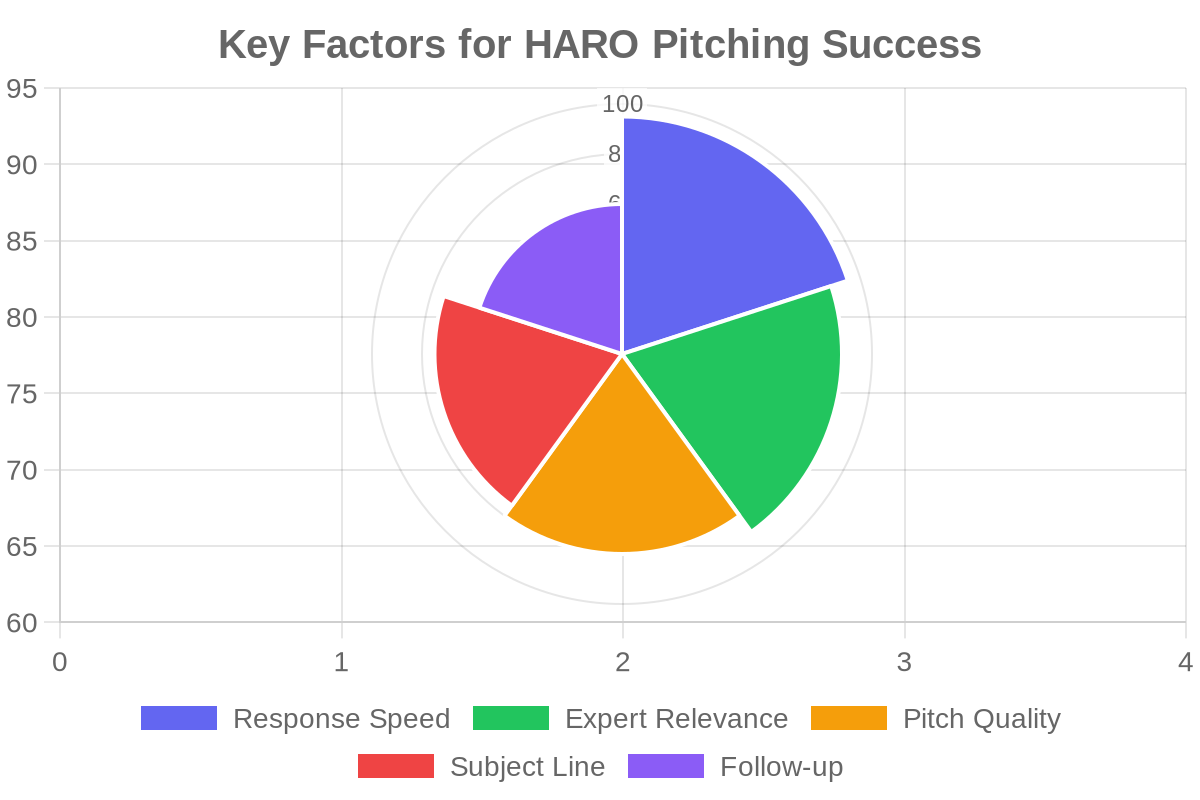
Qwoted Platform Expert Networking
Building editorial backlinks through manual outreach often feels like casting a wide net, hoping for a few bites. In contrast, platforms like Qwoted offer a more focused approach, connecting experts directly with journalists seeking sources for their stories. This differs significantly from broader platforms such as HARO, which typically generate a higher volume of less targeted queries. Qwoted provides a streamlined channel for agencies and business owners to position themselves as authoritative voices. By creating a detailed profile, you attract media opportunities that align with your specific expertise. This targeted methodology helps secure high-quality editorial links, a crucial component for improving domain authority (DA) and search engine rankings.
Many agencies, including IOG, integrate Qwoted as a core part of their link-building strategy. IOG specifically uses Qwoted to consistently secure DoFollow links from publications with a Domain Authority (DA) of 60 or higher. This focus on high-DA sites ensures that the backlinks provide substantial SEO value, passing significant link equity to the client’s domain. This platform is not merely a supplementary tool; it serves as a foundational pillar in IOG’s extensive track record. The agency’s success in delivering over 10,000 links includes a significant contribution from Qwoted, underscoring its effectiveness for sustained link acquisition. Understanding how to optimize your presence on Qwoted is therefore essential for any serious SEO professional.
Crafting Your Expert Profile
Your Qwoted profile functions as your digital resume for journalists. Unlike traditional outreach emails, where you must repeatedly introduce yourself, a well-crafted profile does the heavy lifting, showcasing your credentials proactively.
This initial setup is critical because it determines which journalists discover you and whether they perceive you as a credible source. Invest time in completing every section of your profile with precision and detail. Journalists often scan profiles quickly, so clarity and conciseness are paramount. Include your professional headshot, a compelling bio, and list all relevant areas of expertise.
Specific Keywords For Journalists
Responding to Journalist Queries
Once your profile is active, you will start receiving queries from journalists. These queries are often more specific than those found on other platforms, reflecting Qwoted’s more targeted matching algorithm.
Your ability to respond quickly and effectively directly impacts your success rate. Prioritize speed in your responses. Journalists work on tight deadlines, so the first few relevant experts to reply often get the feature. Aim to respond within minutes, not hours, if possible.
Set Up Notifications
Setting up notifications for new queries can significantly improve your response time. Tailor each response specifically to the journalist’s query. Avoid generic pitches. Read the query carefully and address each point directly, providing concise, actionable insights or quotes. For example, if a journalist asks about the future of AI in marketing, offer a specific trend or prediction supported by data or experience. Always provide value immediately.
Offer a ready-to-use quote, a unique statistic, or a compelling anecdote that the journalist can integrate into their story. This makes their job easier and increases the likelihood of your contribution being included. Remember, the goal is to make their story better with your expertise.
Maximizing Your Qwoted Engagement
Consistent engagement is key to building a strong reputation on Qwoted. The more actively you participate and provide valuable insights, the more visible your profile becomes to journalists. This creates a positive feedback loop, leading to more opportunities over time. Refine your profile based on the types of queries you receive and the success you achieve. If you notice certain topics generate more interest, consider expanding your profile to emphasize those areas.
Conversely, if some areas rarely lead to placements, you might de-emphasize them or refine your approach. Build relationships with journalists who feature you. A simple thank-you email after a successful placement can go a long way. These connections can lead to future opportunities, as journalists often return to sources they trust and have had positive experiences with. This cultivates long-term media relationships.
Consider offering exclusive data or proprietary insights when possible. Journalists constantly seek fresh perspectives and unique content. Providing something exclusive can make your pitch stand out and position you as an indispensable resource. This strategy helps secure prime editorial placements and builds your authority.
Strategic Outcomes and Link Acquisition
The primary objective of using Qwoted within an editorial backlink strategy is to acquire high-quality, authoritative links. By consistently securing placements on DA60+ publications, you not only enhance your client’s search visibility but also build their brand reputation as an industry leader.
These links are editorial because they are earned based on the merit of your expertise, not purchased or manipulated. This process differs from traditional guest posting, where you actively pitch content. On Qwoted, journalists come to you, seeking your input for their existing content. This makes the links inherently more editorial and often more powerful in the eyes of search engines.
The authenticity of these placements is a significant advantage. Ultimately, integrating Qwoted into your manual outreach framework allows for a more efficient and effective path to securing valuable backlinks. It shifts the dynamic from chasing opportunities to attracting them, making it a powerful tool for SEO agencies and business owners aiming to build a robust and sustainable link profile. Embrace this platform to elevate your expert networking and achieve superior link-building results.
Crafting the Perfect Expert Quote
Generating high-quality expert quotes is essential for successful manual outreach. Journalists seek ready-to-publish content that adds unique value to their stories. Your goal is to provide insights so compelling they become instant additions to an article, requiring minimal editing.
This approach directly impacts your success rate. Generic advice rarely gets featured, but unique commentary stands out. For example, IOG’s 100% manual outreach method focuses on delivering genuinely distinctive insights, which leads to higher conversion rates for $399 link investments.
Understanding the Journalist’s Needs
Journalists operate under tight deadlines and often manage multiple stories concurrently. They value efficiency and reliability above all else. When you provide a quote, imagine them needing to copy and paste it directly into their draft, without needing to rephrase or fact-check extensively.
Your quote should enhance their narrative, not force them to rework it. This means offering a clear, concise, and articulate statement that fits seamlessly into their existing content. Think of your contribution as a valuable piece of their puzzle, ready to snap into place.
The “Copy-Paste” Ready Standard
Achieving “copy-paste” readiness requires precision and foresight. The quote must be grammatically perfect, free of jargon, and directly address the topic at hand. It should also convey a specific, actionable, or thought-provoking point.
Consider the journalist’s audience and the publication’s tone. A quote that sounds overly promotional or self-serving will likely be rejected. Instead, focus on providing genuine expertise that educates or informs the reader, aligning with journalistic integrity.
Developing Unique Insights
Avoid common platitudes or general observations that anyone could make. The true value of an expert quote lies in its uniqueness. This means drawing on specific experiences, proprietary data, or a fresh perspective that challenges conventional wisdom.
Before drafting your quote, ask yourself: Does this offer a new angle? Does it provide a specific example or a counter-intuitive truth? If your insight is readily available elsewhere, it lacks the distinctiveness journalists crave for their editorial backlinks.
Beyond Generic Advice
Many pitches fail because they offer generic advice. For instance, stating “SEO is important for businesses” provides no real value. A better approach would be to explain why a specific aspect of SEO is gaining traction, backed by a case study or emerging trend.
IOG’s success with its 100% manual outreach framework stems from this commitment to unique insights. This method consistently yields a higher conversion rate for their $399 link investments because the content is genuinely valuable and publishable, rather than merely promotional.
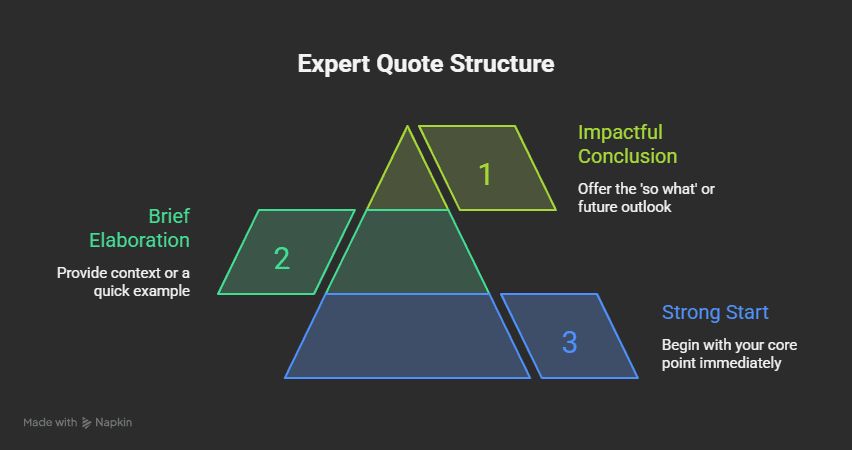
Structuring Your Expert Quote
An effective expert quote has a clear structure. It typically starts with a direct statement, followed by a brief explanation or supporting detail. Conclude with the implication or a forward-looking perspective.
Keep sentences concise and impactful. Aim for an average of 15-20 words per sentence, mixing shorter, punchy phrases with slightly longer ones for rhythm. This ensures readability and maintains the journalist’s attention.
- Start Strong: Begin with your core point immediately.
- Elaborate Briefly: Provide context or a quick example.
- Conclude with Impact: Offer the ‘so what’ or future outlook.
The Power of Specificity
Specificity elevates a quote from good to great. Instead of saying “companies should prioritize content,” try “companies that invest in long-form, evergreen content see a 30% increase in organic traffic within six months.” The latter is far more compelling.
Quantitative data, even if illustrative rather than strictly scientific, adds significant weight. Journalists appreciate statistics and tangible results, as they provide concrete evidence for their readers. Always ensure any data cited is credible and easily verifiable.
Refining Your Language
Use clear, active voice. Avoid passive constructions that can make your message seem less direct or authoritative. For instance, say “we implemented the strategy” instead of “the strategy was implemented by us.”
Eliminate jargon or technical terms unless absolutely necessary, and even then, provide a brief, accessible explanation. Remember, the journalist’s audience may not be as familiar with your industry’s specific vocabulary. Simplicity ensures broader appeal.
- Active Voice: Make your statements direct and powerful.
- Plain Language: Avoid industry jargon or overly complex terms.
- Conciseness: Every word should serve a purpose; cut anything superfluous.
The “So What?” Test
Before sending any quote, apply the “So what?” test. Read your statement and ask if it provides clear value or insight to the reader. If the answer isn’t immediately obvious, revise it. The quote must justify its inclusion in the article.
This self-editing step is critical for ensuring your quote meets the high standards of editorial content. A quote that passes this test is far more likely to be published, contributing to your overall manual outreach success and earning those valuable editorial backlinks.
Connecting to Engagement Frameworks
Crafting the perfect expert quote is not an isolated task; it’s an integral part of your larger manual outreach framework for engagement. A well-constructed quote acts as a powerful hook, demonstrating your expertise and the value you can bring to a publication.
When journalists receive a pitch with a compelling, ready-to-use quote, it significantly increases the likelihood of a positive response. This efficiency and quality signal your professionalism and understanding of their needs, fostering stronger relationships for future collaborations.
Ultimately, the goal is to consistently provide content that journalists find irresistible. By focusing on unique insights and “copy-paste” ready commentary, you not only secure valuable editorial backlinks but also build a reputation as a reliable and knowledgeable source in your field.
Subject Line Optimization for Editors
Crafting effective subject lines significantly impacts whether an editor opens your outreach email. This initial step in manual outreach determines if your valuable content even gets seen. A poorly chosen subject line often leads to an unopened email, wasting your efforts. IOG’s 6-year data set reveals a critical insight: specific, punchy subject lines increase open rates by a substantial 40%. This data underscores the importance of moving beyond generic greetings. The goal is to pique an editor’s interest immediately, making them want to learn more.
International Outsourcing Group has been delivering DA60+ DoFollow editorial backlinks for 6 years with over 10,000 placements worldwide — guaranteed within 30 days or replaced free. From $399 per link, it’s the most powerful link building strategy available for SEO agencies and serious business owners. Click here to learn more and place your order.
Using the Journalist’s Query Title
Applying the journalist’s query title directly in your subject line is a powerful technique. This method positions your pitch as a direct answer to an editor’s content needs. It frames your email not as an unsolicited request but as a helpful contribution. Editors often publish “query” or “call for pitches” posts on their publication’s website or social media.
These queries outline specific topics or angles they seek. Integrating these exact titles into your subject line signals immediate relevance. For example, if an editor posts a query titled “Seeking Experts on Sustainable Urban Planning,” your subject line should mirror this. A subject line like “Pitch: Seeking Experts on Sustainable Urban Planning – [Your Topic]” clearly connects to their current needs. This direct approach reduces an editor’s cognitive load, making it easier to see the immediate value.
Structuring Your Subject Line
Building a strong subject line involves a few key components. Start with a clear identifier, such as “Pitch” or “Contribution.” Follow this with the exact journalist’s query title. Finally, add a concise, compelling detail about your proposed content. This structure provides clarity and context without revealing too much. It creates just enough curiosity to encourage an open. Remember, the subject line’s sole purpose is to get the email opened, not to fully explain your pitch.
| Component | Purpose | Example |
|---|---|---|
| Identifier | Signals intent | Pitch: |
| Query Title | Shows relevance | Seeking Experts on Sustainable Urban Planning |
| Brief Detail | Adds value/context | – Case Study on Green Infrastructure |
Specificity and Punchiness
Achieving specificity means avoiding vague or overly broad terms. Instead of “Content Idea for Your Blog,” use “Pitch: Data-Driven Strategies for Q3 E-commerce Growth.” The latter is precise and immediately conveys value. Punchiness refers to conciseness and impact. Cut unnecessary words and get straight to the point.
Editors receive hundreds of emails daily, so brevity is a virtue. A punchy subject line respects their time. Consider the difference between “I have an idea for an article that I think your readers would really enjoy” versus “Pitch: The Future of Remote Work Tech.” The second example is direct, clear, and intriguing. It tells the editor exactly what to expect.
Common Subject Line Mistakes to Avoid
Many outreach efforts fail at the subject line stage due to common errors. One frequent mistake is using generic phrases like “Collaboration Opportunity” or “Quick Question.” These provide no specific value and often get filtered out or ignored. Another pitfall is making the subject line too long. Email clients often truncate lengthy subjects, hiding the most important information. Aim for subject lines that are easily readable on both desktop and mobile devices.
Finally, avoid clickbait or misleading subject lines. While they might temporarily increase open rates, they damage your credibility when the email content doesn’t deliver. Building trust with editors is paramount for long-term success.
| Mistake | Why it Fails | Better Approach |
|---|---|---|
| Generic phrases | Lacks specific value | Use query titles |
| Too long | Gets truncated, loses impact | Keep it concise, under 50 characters |
| Clickbait | Damages credibility | Be honest and relevant |
| Self-serving | Focuses on your gain | Focus on editor’s audience/needs |
Testing and Iteration
Optimizing subject lines is not a one-time task; it requires continuous testing. Monitor your open rates for different subject line formats and adapt your strategy based on what performs best. This iterative process refines your approach over time. A/B testing, where you send two versions of a subject line to similar segments of your outreach list, can provide valuable data.
Analyze which version yields higher open rates. Tools within many email outreach platforms can help you track these metrics. Even small adjustments, like changing a single word or adding a bracketed phrase, can significantly impact open rates. Pay attention to industry trends and editorial preferences. What works for one publication might not work for another.
Connecting to Engagement Frameworks
Effective subject lines are the gateway to successful engagement. Within any manual outreach framework, the subject line acts as the initial hook. If this hook fails, subsequent engagement efforts, no matter how well-crafted, become irrelevant. The goal is to move the editor from “unaware” to “interested.”
A well-optimized subject line achieves this by demonstrating immediate relevance and value. It aligns with the overarching strategy of building genuine connections with editors, which is fundamental to securing editorial backlinks. By prioritizing subject line optimization, SEO agencies and business owners can significantly increase their pitch open rates. This directly contributes to more opportunities for content placement and, ultimately, more valuable editorial backlinks. It is a foundational element in any successful outreach campaign.
Traffic Source Analysis for SEO
Securing a backlink from a website with strong traffic numbers is only the first step. You must also understand where that traffic originates. A site showing 5,000 monthly visitors might receive most of its audience from social media, which carries different SEO value than organic search traffic.
Our agency, IOG, mandates that every potential backlink source has at least 5,000 monthly visitors. Crucially, these visitors should primarily come from organic search. This distinction matters because organic traffic indicates the site already ranks well for relevant keywords, signaling authority and topical relevance to search engines.
Verifying a site’s traffic sources ensures the backlink provides maximum benefit. You want to align with sites that Google already trusts and promotes. A high volume of organic search traffic confirms this trust, making the editorial backlink more impactful for your own SEO efforts.
Assessing Organic Traffic Dominance
Several tools help you analyze a prospective site’s traffic sources. Platforms like Ahrefs, Semrush, and Similarweb provide breakdowns of where visitors come from. You need to look for a high percentage attributed to “Organic Search” or “Natural Search.”
A significant proportion of organic traffic suggests the site publishes content that consistently ranks. This means their content aligns with user intent, and search engines consider it valuable. Such sites are ideal partners for editorial backlinks, as they pass on a stronger signal of authority.
Conversely, a site with 5,000+ monthly visitors but minimal organic traffic might rely heavily on direct visits, social media shares, or paid ads. While these sources bring eyeballs, they do not convey the same SEO authority as organic search. Your goal is to find sites that genuinely earn their visibility through search engines.
Understanding Referral Traffic’s Impact
Referral traffic, when originating from a highly authoritative domain, offers unique benefits. For instance, a DA60+ site (Domain Authority of 60 or higher) sending referral traffic can directly drive sales. This happens because users clicking a link from a trusted source are often closer to a purchase decision.
While our primary focus remains on organic search, do not dismiss high-quality referral traffic. When a reputable site links to your content, it acts as an endorsement. This endorsement not only sends direct visitors but also signals to search engines that your content is valuable enough to be referenced by an established authority.
Analyze referral sources carefully. A link from a niche industry publication with high domain authority is far more valuable than a link from a general forum, even if both send some traffic. Quality always trumps quantity when it comes to referral sources.
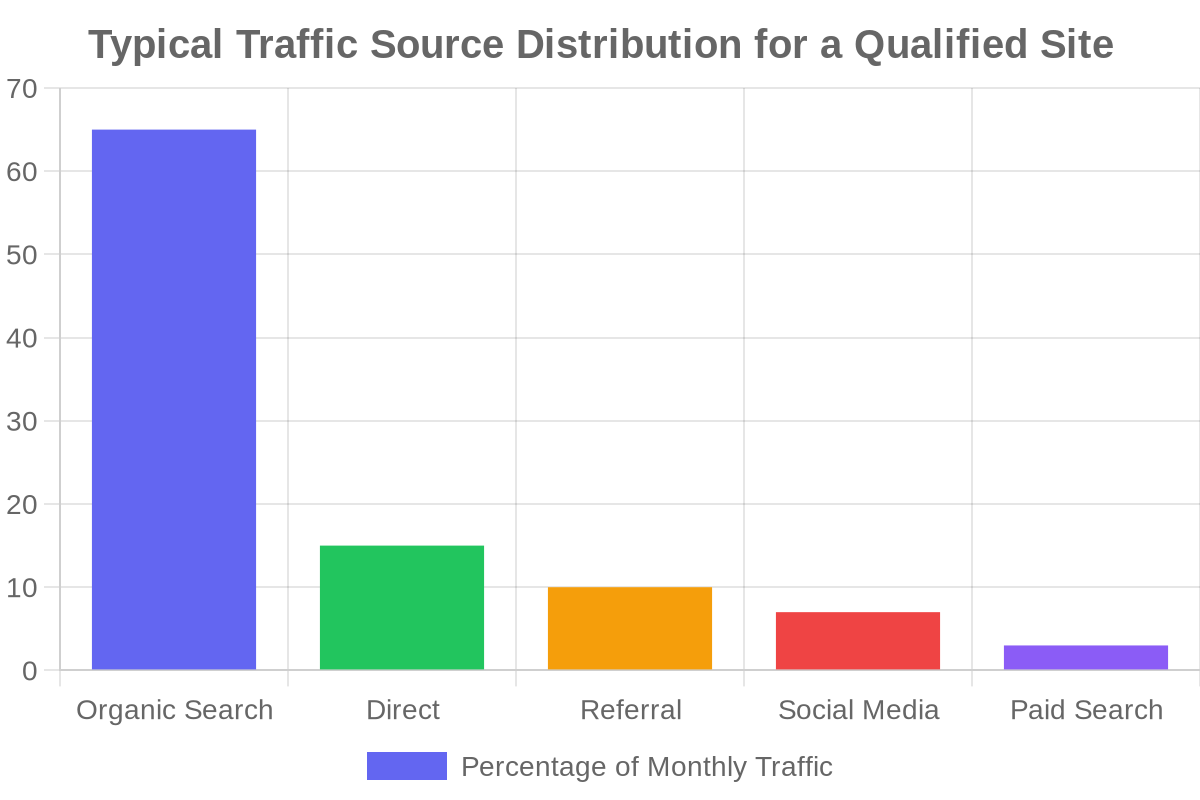
Practical Steps for Traffic Source Verification
Start by inputting the potential backlink site’s URL into your chosen SEO tool. Navigate to the traffic overview or traffic sources report. Look for a clear breakdown of traffic by channel, specifically focusing on the percentage derived from organic search.
Aim for sites where organic search accounts for at least 50-60% of total traffic. Higher percentages are always better. This indicates a robust content strategy and strong organic visibility, which are key indicators of a valuable backlink partner.
Next, examine the keywords driving that organic traffic. Do these keywords align with your niche? If a site receives significant organic traffic for irrelevant terms, its authority might not transfer effectively to your specific content. Relevance is a critical factor in backlink efficacy.
Identifying Red Flags in Traffic Data
Be wary of sudden, unexplained spikes in traffic that quickly drop. This could indicate a temporary viral post or even bot traffic, neither of which represents sustainable authority. Consistent, steady traffic growth over time is a much better indicator of a healthy site.
Another red flag is a disproportionately high percentage of direct traffic without a recognizable brand. While established brands naturally get direct visits, a lesser-known site with 70% direct traffic might be inflating numbers. Always cross-reference with other metrics and tools.
Finally, avoid sites with an excessive amount of traffic from obscure or low-quality referral sources. This suggests engagement in manipulative link schemes rather than organic growth. Your goal is to build a profile of high-quality, editorially earned backlinks.
By diligently analyzing traffic sources, you move beyond mere visitor counts. You ensure that your editorial backlinks come from sites that genuinely earn their audience through valuable content and strong organic performance. This focused approach maximizes the SEO benefit for your agency or business.
Identifying Link Farm Red Flags
Many agencies believe a high visitor count alone qualifies a site for backlinks. This assumption often leads to partnering with dangerous platforms. Identifying sites that openly sell links is crucial for risk mitigation, preventing potential Google penalties that can severely damage client SEO. Recognizing a link farm is simpler than most realize. These sites exist primarily to sell backlinks, often displaying obvious “Advertise with Us” or “Guest Post Opportunities” pages with pricing tables. Such transparency might seem helpful, but it signals a direct violation of Google’s Webmaster Guidelines, making any link from them highly toxic.
Common Red Flags
A common red flag is a site’s content quality. Link farms frequently publish low-quality, irrelevant articles across a broad range of topics, lacking any deep expertise. This content often serves merely as a placeholder for inserting backlinks, showing no genuine editorial oversight or value to readers.
Another tell-tale sign involves the site’s outbound link profile. A legitimate site links out naturally to relevant, authoritative sources. Conversely, link farms exhibit an unusually high number of outbound links, many of which point to unrelated or low-quality domains, indicating a clear pattern of link selling. Consider the site’s overall design and user experience. Many link farms prioritize quantity over quality, resulting in cluttered layouts, excessive ads, and poor navigation.
A professional, well-maintained website typically focuses on providing a good experience for its audience, not just serving as a conduit for paid links. Verifying the site’s traffic sources can also reveal issues. While a site might claim 5,000+ monthly visitors, scrutinize the source of this traffic. If analytics show a disproportionate amount of traffic from obscure regions or bot activity, it suggests inflated numbers designed to attract unsuspecting link buyers.
Examine The About Us Page
Examining the site’s “About Us” or “Contact” pages often reveals a lack of transparency. Legitimate publications typically feature clear information about their editorial team, mission, and physical location. Link farms, however, frequently provide minimal or generic details, concealing their true commercial intent. Look closely at the types of articles published. If a site features an unnatural mix of topics—for example, articles on finance, pet care, and automotive repair all within the same week—it’s likely a content mill designed to accommodate various link buyers, not a specialized publication.
This broad, unfocused content strategy is a strong indicator of a link farm. In practice, manual outreach through platforms like HARO (Help A Reporter Out) or Qwoted helps agencies like IOG avoid these public sellers entirely. These platforms connect experts with journalists seeking sources for legitimate stories, ensuring that any resulting backlinks are editorially earned, not purchased.
This method bypasses the direct link-selling marketplace and its inherent risks. Agencies must understand the crucial distinction between earned editorial mentions and paid placements. Editorial backlinks are natural endorsements that arise from valuable content or expertise. Paid links, even if disguised, are transactional and can trigger Google’s algorithms, leading to penalties that harm client rankings and trust. Focusing on genuine editorial opportunities means prioritizing content quality and relevance above all else.
Pubishing High Value Content
A site that consistently publishes high-value content will naturally attract organic links without resorting to selling them. This approach builds long-term authority and resilience against algorithmic updates. Remember, the goal is to build a robust, sustainable backlink profile for clients. This means actively avoiding any site that shows the tell-tale signs of a link farm. Investing time in careful vetting protects client SEO and maintains your agency’s reputation as a reliable partner.
IOG offers a free replacement if a link doesn’t meet quality standards within 30 days, underscoring the importance of rigorous vetting. This guarantee reflects a commitment to securing only high-quality, penalty-proof backlinks, ensuring clients receive lasting SEO value without risk.
This policy protects against unforeseen quality drops or a site later revealing itself as a link farm. Ultimately, spotting and avoiding these toxic sites protects your clients from Google penalties. A proactive approach to identifying red flags, combined with a commitment to ethical link building practices, forms the bedrock of a successful and sustainable SEO strategy. Prioritize quality and authenticity to secure truly valuable editorial backlinks.
Geographic Relevance in Authority Building
Assessing a site’s geographic relevance ensures your backlinks attract the right audience. A website might have high traffic, but if its visitors are from the wrong regions, the link’s value diminishes for your specific business goals. This step goes beyond raw visitor numbers to align traffic geography with your target markets.
Consider the example of an agency that serves a worldwide audience. They understand that a global reach for their own content ensures their delivered links carry global authority. This perspective is vital for agencies and businesses aiming for broad market penetration rather than strictly local impact.
Matching Traffic to Target Markets
Verifying a site’s audience location is a critical step after confirming its visitor volume. Tools like Similarweb or SEMrush provide detailed geographic breakdowns of a website’s traffic. You can see the top countries and even specific cities where visitors originate.
This data helps you determine if a potential linking partner’s audience aligns with your business’s target demographics. For instance, a local restaurant in New York City gains more from a link on a blog popular with New Yorkers than from a site primarily read in London, even if the latter has higher overall traffic.
Global vs. Local Traffic Impact
Understanding the distinction between global and local traffic is fundamental for strategic link building. A global audience provides broader brand exposure and can boost overall domain authority, which benefits businesses with international reach. Conversely, a strong local audience drives highly qualified leads for geographically specific services.
Many businesses operate with a blend of local and global objectives. A SaaS company might target a global user base but have specific marketing campaigns for key regions like North America or Europe. In such cases, a diversified backlink portfolio, including both globally relevant and regionally focused sites, is most effective.
| Traffic Type | Primary Benefit | Target Business | Example Site |
|---|---|---|---|
| Global Traffic | Broad brand exposure | E-commerce, SaaS, Info products | TechCrunch.com |
| Local Traffic | Specific lead generation | Restaurants, Local services | NYC-based Food Blog |
Practical Application: Analyzing Geographic Data
Accessing geographic traffic data requires using specialized SEO tools. Most reputable platforms offer this feature as part of their competitive analysis suites. You input the potential linking site’s URL and review the audience demographics.
Focus on the percentage of traffic from your target regions. A site with 5,000+ monthly visitors is a good starting point, but if only 5% of those visitors are in your target country, the actual relevant audience might be too small to justify the effort. Aim for a significant percentage, ideally above 20-30%, from your primary target market.
This geographic analysis becomes even more critical when dealing with highly niche industries or specific language markets. For example, a business targeting Spanish speakers in Mexico needs backlinks from sites popular with that exact demographic, not just general Spanish-language sites.
Refining Your Geographic Targeting
Refining your geographic targeting often involves a tiered approach. Identify your primary target countries, then secondary regions, and finally any global aspirations. This hierarchy guides your selection of linking partners, ensuring your outreach efforts are highly efficient.
Consider the language of the content as well. A site might have global traffic, but if its primary language does not match your target audience, the relevance still suffers. Aligning both geography and language maximizes the impact of an editorial backlink.
IOG, with their extensive experience delivering over 10,000 backlinks, consistently emphasizes this multi-faceted approach. They ensure that qualifying sites with 5,000+ monthly visitors also possess the correct geographic and linguistic relevance for their clients. This rigorous process drives tangible results for SEO agencies and business owners alike.
| Criteria | Description | Impact on Link Value |
|---|---|---|
| Country Match | Publisher’s top traffic countries align with your target markets. | Directly increases relevance. |
| Regional Match | Specific states/provinces or cities align. | Crucial for local businesses. |
| Language Match | Content language aligns with your target audience’s language. | Ensures audience understanding. |
| Audience Intent | Visitor behavior on publisher site aligns with your offerings. | Higher conversion potential. |
By diligently applying these geographic relevance filters, you transform potential backlinks from mere numbers into powerful, targeted authority signals. This strategic approach ensures that every editorial backlink you acquire contributes directly to your business’s growth and market penetration. It moves beyond simply finding high-traffic sites to finding relevant high-traffic sites.
Outsourcing vs In-House Outreach Costs
Building an in-house team for editorial backlink outreach, especially using platforms like HARO (Help a Reporter Out), rarely saves money. Many agencies and business owners assume that internal resources are inherently cheaper, overlooking the significant hidden costs and delays involved in establishing such an operation from scratch.
Consider the immediate investment required to simply get started. Recruiting, hiring, and training a dedicated PR or outreach manager often takes several months. During this period, no links are built, meaning no SEO value is generated, and your campaign effectively stalls before it even begins.
International Outsourcing Group has been delivering DA60+ DoFollow editorial backlinks for 6 years with over 10,000 placements worldwide — guaranteed within 30 days or replaced free. From $399 per link, it’s the most powerful link building strategy available for SEO agencies and serious business owners. Click here to learn more and place your order.
The Real Cost of Building In-House
Hiring a full-time PR manager, even at an entry-level salary, represents a substantial fixed cost. This person needs benefits, office space, equipment, and access to various outreach tools. Beyond salary, you must account for the time spent on onboarding and continuous training to ensure they understand best practices for editorial link acquisition.
Moreover, a single PR manager likely cannot handle the volume and consistency needed for aggressive link building. Scaling means hiring more staff, which multiplies all these costs. Each new hire introduces additional recruitment cycles, training periods, and management overhead, further delaying your return on investment.
Another often-ignored factor is the learning curve associated with HARO and similar platforms. Successfully securing editorial backlinks demands specific skills: identifying relevant queries, crafting compelling pitches, and building relationships with journalists. Developing this expertise takes time and involves trial and error, which directly impacts efficiency and success rates.
Comparing Operational Expenses
Let’s directly compare the financial implications of an in-house approach versus partnering with a specialized agency. An in-house team incurs salaries, benefits, software subscriptions, and management time. An agency, conversely, offers a fixed cost per link or a retainer for a set volume of work.
For example, an experienced outreach agency like IOG offers editorial backlinks at $399 per link. This price covers all aspects of the outreach process, from query monitoring and pitch writing to relationship management and follow-ups. You pay only for successful placements, eliminating the risk associated with failed internal efforts.
| Cost Factor | In-House Team | Agency Partnership |
|---|---|---|
| Startup Time | 3-6 Months | Immediate |
| Salaries & Benefits | High (Fixed) | Included in Link Price |
| Software & Tools | Separate Cost | Included in Link Price |
| Training & Expertise | Months of Development | Ready-Made (6+ Years) |
| Link Cost (Approx.) | Variable, Hard to Track | $399/Link |
| Scalability | Slow, Costly | Fast, On-Demand |
This fixed cost per link from an agency is often cheaper than the hourly rate of a full-time PR manager when you factor in all overhead. The agency’s efficiency, built over years of experience, means they can achieve results faster and more consistently than a newly formed internal team.
The Value of Established Expertise
Agencies like IOG bring over six years of specialized experience in editorial link building. This means they have established processes, refined pitching strategies, and a deep understanding of what journalists seek. They possess existing relationships and a track record of securing high-quality placements, which is invaluable.
This established expertise translates directly into efficiency and higher success rates. An agency can begin building links for you almost immediately, leveraging their existing infrastructure and knowledge base. This significantly reduces your time-to-value, allowing you to see results much faster than if you started from scratch.
Furthermore, an agency partnership allows you to scale your link building efforts on demand. If you need more links, you simply increase your order with the agency. This contrasts sharply with the arduous process of hiring, training, and integrating additional staff into an in-house team, which introduces significant delays and administrative burdens.
Economic Efficiency
Focusing on economic efficiency, outsourcing allows your internal team to concentrate on core competencies. Instead of diverting resources to a specialized, time-consuming task like HARO outreach, your team can focus on content creation, technical SEO, or other strategic initiatives that directly align with their expertise.
Therefore, the decision to build or buy an editorial link building operation often boils down to a clear economic choice. While the idea of controlling the process in-house seems appealing, the practical realities of cost, time, and specialized expertise heavily favor a partnership with an established agency for most SEO agencies and business owners.
White-Label Solutions for SEO Agencies
Scaling link building operations demands smart partnerships. Many SEO agencies struggle to meet client demand for high-quality editorial backlinks. This often leads to missed opportunities or diluted service offerings. White-label solutions provide a practical answer to this common challenge, allowing agencies to expand without adding significant internal overhead.
These partnerships enable your agency to offer a broader range of services. You can deliver expert-level link building without needing to build an in-house team. This integration supports the broader goal of scaling production through specialized external support, as discussed in the main chapter. It means your agency can focus on client strategy and relationships.
Integrating Third-Party Editorial Link Building
Bringing external link building into your service menu is straightforward. You essentially resell a specialized service under your own brand. This approach maintains your client relationships while leveraging the expertise of a dedicated link building provider. It’s a common and effective strategy for service expansion.
Most agencies find that integrating a third-party partner simplifies their workflow. You avoid the complexities of hiring, training, and managing a distinct outreach team. This allows your existing staff to focus on their core competencies, like technical SEO or content creation. The result is a more efficient and profitable service delivery model.
Benefits of Agency-to-Agency Services
Working with specialized providers, like IOG, offers distinct advantages. These providers focus exclusively on link acquisition, refining their processes to deliver consistent quality and scale. This singular focus means they often achieve better results than a generalist in-house team could. They become an extension of your agency, working behind the scenes.
IOG, for example, specializes in delivering editorial backlinks specifically for other SEO agencies. This agency-to-agency focus means their services are tailored to the unique needs and operational flows of an SEO business. They understand the importance of discretion, consistent reporting, and reliable delivery schedules. This makes integration seamless for your team.
Maintain Consistent Quality Of Editorial Links
A key benefit is the ability to maintain consistent quality across all client projects. Specialized partners employ proven methodologies and experienced outreach professionals. This ensures that every link acquired meets high standards, reflecting positively on your agency’s brand. It’s about delivering predictable, high-value outcomes for your clients.
Furthermore, white-label services help manage fluctuating client demands. Your agency can scale up or down its link building capacity as needed, without the fixed costs of an internal team. This flexibility is crucial for adapting to market changes and client growth. It prevents bottlenecks during peak periods and reduces idle resources during slower times.
Testing Quality and Building Trust
Starting with a new partner always involves an element of trust. Agencies need to verify the quality of the links delivered before committing to larger projects. IOG addresses this directly by offering a minimum order of just two links. This low entry barrier allows agencies to test the quality of their editorial backlinks firsthand.
This initial test is vital for evaluating the relevance, authority, and naturalness of the placements. You can assess how well the links integrate into the content and the overall editorial standards of the publishing sites. This direct experience helps build confidence in the partnership before you scale up your orders. It’s a risk-averse way to begin.
Once satisfied with the quality, agencies can confidently integrate these services into their larger client campaigns. The goal is to establish a long-term, reliable partnership. This initial testing phase is a practical step towards achieving that reliability. It’s about validating the provider’s claims with real-world results.
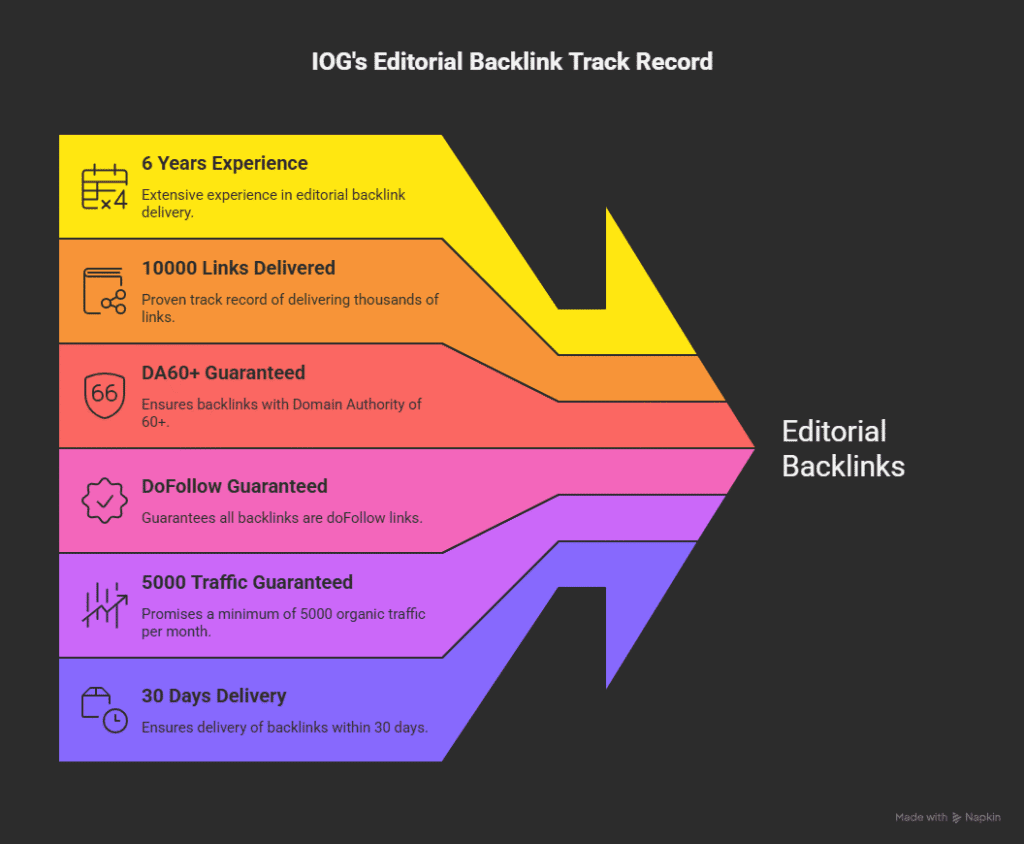
Proven Track Record and Scale
Experience matters when selecting a white-label partner. A provider with a strong history demonstrates reliability and effectiveness. IOG has delivered over 10,000 links, with the vast majority of these coming through white-label partnerships. This extensive track record underscores their capability to handle high volumes and maintain quality.
This volume of successful deliveries indicates a highly refined process and strong relationships with publishers. It means your agency benefits from an established infrastructure, not one being built on the fly. Such a partner can consistently deliver editorial backlinks that move the needle for your clients. They have already navigated and overcome common challenges.
The focus on white-label partnerships also shows a deep understanding of agency needs. They know how to operate discreetly and provide the necessary reporting for your client communications. This expertise is invaluable for agencies looking to expand their service offerings seamlessly. It’s about leveraging a specialized, proven system.
Operationalizing White-Label Link Building
Implementing white-label solutions within your agency involves a few key steps. First, order the editorial backlinks your clients need. This should include specifying the business name, the title of the person to be used in the quote and their full name. Also include the desired URL to be linked to in the article. This can be the home page or a sales page, any URL that you want the link to point to.
Next, establish a clear delivery timeline protocol with your partner. You should know exactly when the links will be delivered so you can manage client expectations. Many white-label providers offer guaranteed turnaround times. This ensures everyone is aligned on project goals and progress.
Finally, integrate the acquired links into your client reporting. Present these results as part of your agency’s overall SEO strategy. The client sees a unified service, while your agency benefits from the specialized delivery. This smooth integration makes white-label link building a powerful tool for growth and client satisfaction. It enhances your agency’s total value proposition.
Managing Bulk Editorial Orders Effectively
Ignoring structured processes for bulk editorial orders often leads to inconsistent link quality and missed deadlines, which directly impacts your SEO campaigns. Instead, implementing a clear workflow allows agencies and business owners to scale their link acquisition efforts without sacrificing the crucial elements of quality or oversight.
This approach involves understanding how expert agency partnerships, like IOG’s, handle the heavy lifting of high-volume, manual outreach. Their operational model supports consistent, high-quality editorial backlinks even when dealing with significant order quantities.
Streamlining High-Volume Workflows
Successfully managing large volumes of editorial backlink orders requires a systematic approach to outreach and content placement. Without a defined workflow, even a dedicated team can struggle to maintain efficiency and quality across numerous projects.
Agencies specializing in editorial backlinks often employ specific methodologies to ensure each link meets stringent quality standards. This includes meticulous vetting of potential publishers and careful content integration, making sure every link is genuinely editorial.
The Role of Manual Outreach in Bulk Orders
Scaling link acquisition through bulk orders does not mean sacrificing the personalized touch that defines high-quality editorial backlinks. IOG’s team, for example, commits to 100% manual outreach for every single order, regardless of its size.
This manual process ensures that each outreach attempt is tailored and genuine, increasing the likelihood of securing valuable placements. Automated tools often fall short here, as they cannot replicate the nuanced communication required to build relationships with publishers.
Furthermore, human judgment is essential for evaluating the relevance and authority of potential linking domains. A manual review prevents placement on low-quality or spammy sites, which could harm your SEO efforts rather than help them.
Ensuring Quality and Speed
One common concern with bulk orders is the potential trade-off between speed and quality. Many believe that increasing volume inevitably leads to a drop in the standard of backlinks acquired. However, established agencies defy this assumption through optimized internal processes.
IOG, for instance, offers a 30-day delivery guarantee that applies even to the largest bulk orders. This commitment highlights their ability to maintain efficiency without compromising the integrity or effectiveness of the editorial backlinks provided.
Achieving this balance requires a robust internal system for project management, communication, and quality control. Each stage of the link-building process, from prospecting to content creation and placement, must be meticulously managed.
Maintaining Oversight and Transparency
Even when outsourcing regular bulk orders, clients need clear guarantees as to the delivery and results of their campaigns. Transparency builds trust and allows for timely adjustments if needed, ensuring the strategy remains aligned with overarching business goals.
Reputable agencies provide details once the links have been finalised including the live link, Domain Authority, traffic statistics and the name of the publication. This insight helps business owners and SEO agencies understand the tangible value delivered.
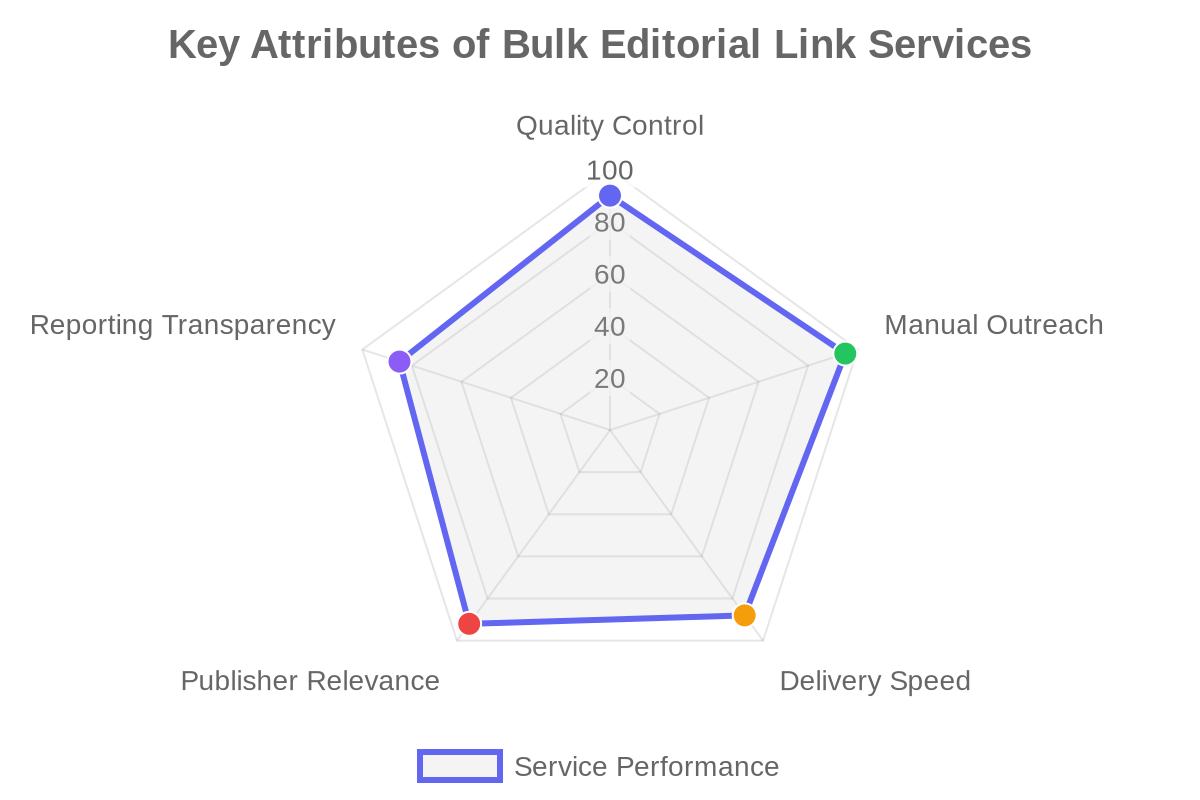
Structuring Your Bulk Order Process
Effective management of bulk orders can be challenging with some providers. This can often include the need for meetings and discussions.
However, systems such as IOG’s online ordering make bulk orders much easier and much more efficient. The online ordering form allows you to provide key details for each order and to specify the number of links (up to 30) for that particular order.
Consider implementing a multi-order approach for larger campaigns, breaking them down into URL’s. One order may be for 10 links to the home page URL, the next 5 orders may be for 10 links per service page.
Integrating Bulk Orders into Your Overall SEO Strategy
Bulk editorial backlinks should complement, not replace, other aspects of your SEO strategy. They provide a powerful boost to your domain authority and organic rankings, but must work in concert with on-page SEO, technical SEO, and content marketing.
Analyze the impact of these backlinks on your target keywords and overall organic traffic. Use analytics to track changes in search visibility and referral traffic from your newly acquired links, measuring their direct effect.
By effectively managing bulk editorial orders through expert agency partnerships, SEO agencies and business owners can significantly accelerate their link acquisition goals. This allows for scalable growth in organic search performance without compromising the quality or strategic value of each backlink.
Cost Per Link Performance Metrics
Most SEO agencies and business owners evaluate backlinks on price alone, but this approach often overlooks the true value proposition. A $399 premium dofollow link offers a significantly different return than cheaper alternatives, which means evaluating performance requires more than a simple cost comparison.
This section explores how to calculate the genuine return on investment (ROI) for a high-authority link. Understanding these metrics helps you justify the budget for quality links, ensuring your investment drives meaningful organic growth rather than just adding numbers to a spreadsheet.
Understanding the $399 Link Investment
Investing in a $399 link from a reputable provider like IOG means acquiring a backlink from a domain with a Domain Authority (DA) of 60 or higher. This price point covers a comprehensive service. It includes manual outreach to secure placement, and the actual placement of the link within that content.
Cheaper links, typically priced between $50 and $100, rarely include these critical services. They often come from lower-authority domains, use generic content, or rely on automated outreach methods. Such links frequently fail to meet essential quality criteria, like the 5,000+ traffic minimum IOG guarantees for its placements.
Traffic and Authority Guarantees
A key differentiator for premium links is the guaranteed traffic minimum. IOG, for example, ensures each $399 link comes from a domain receiving at least 5,000 organic visitors per month. This traffic threshold is crucial because it indicates a site’s real-world authority and relevance, signaling value to search engines.
Links from sites with low traffic, regardless of their stated DA, provide minimal SEO benefit. They contribute little to referral traffic or brand visibility. This means a $50 link from a site with 50 visitors per month offers a vastly inferior return compared to a $399 link from a site with 5,000+ visitors.
| Link Cost | Guaranteed Traffic (Monthly) | Included Services | Typical DA Range |
|---|---|---|---|
| $50 – $100 | Often < 500 | Basic placement, limited content | DA 20-40 |
| $399 (IOG) | 5,000+ | Manual outreach, content, placement | DA 60+ |
Calculating True ROI: Premium vs. Cheap Links
To calculate the true ROI, consider the long-term impact of each link type. A $399 high-authority link contributes to significant improvements in keyword rankings, organic traffic, and domain authority. These benefits translate directly into increased leads and sales over time.
In contrast, a cheap link might offer a quick number boost but provides negligible, if any, lasting impact. In some cases, low-quality links can even harm your SEO efforts, leading to penalties or a loss of trust from search engines, which means their true cost can be far higher than their initial price.
Measuring Link Effectiveness
Effective link measurement goes beyond simply tracking the number of links acquired. Focus on metrics that reflect actual business impact. These include improvements in organic keyword rankings, an increase in referral traffic to your site, and a measurable rise in your own domain authority.
Additionally, monitor the conversion rates of traffic driven by these links. If a premium link generates highly qualified leads, its value far exceeds its initial cost. This holistic view of performance shows the genuine worth of your backlink investment.
| Performance Metric | Premium Link ($399) Impact | Cheap Link ($50-$100) Impact |
|---|---|---|
| Organic Keyword Rankings | Significant improvement | Minimal or no change |
| Organic Traffic Increase | Measurable and sustained growth | Negligible impact |
| Referral Traffic Quality | High, engaged visitors | Low, often irrelevant traffic |
| Domain Authority (Your Site) | Positive, gradual increase | Little to no effect |
| Brand Visibility & Trust | Enhanced perception | Limited or negative impact |
Long-Term Value and Sustainability
A $399 editorial backlink is a long-term asset. It contributes to your site’s authority and ranking power for years. The content created for these placements is often evergreen, meaning it remains relevant and continues to drive value over time, providing sustained SEO benefits.
Cheap links, conversely, are often short-lived. They might be removed without notice, or the linking domain could lose its authority, rendering the link worthless. This lack of permanence means cheap links require continuous replacement, increasing their hidden cost and decreasing their overall efficiency.
Risk Assessment and Quality Control
The risk associated with cheap links is substantial. Many low-cost link providers use questionable tactics that violate search engine guidelines. This puts your site at risk of manual penalties or algorithmic demotion, which can be costly and time-consuming to recover from.
Premium providers, like IOG, adhere to strict quality control measures and ethical outreach practices. They prioritize placements on legitimate, high-quality websites, ensuring your link profile remains clean and resilient against algorithm updates. This focus on quality protects your investment and your brand’s online reputation.
Consider the total cost of ownership for each link type. A $399 link might seem expensive upfront, but its durability, guaranteed performance, and low risk make it a more cost-effective choice in the long run. It builds a robust and sustainable SEO foundation for your business.
Minimum Order Requirements for Testing
Ignoring a structured testing approach for editorial backlinks leads to wasted budget and unclear results. A calculated pilot campaign, however, allows you to measure impact before committing significant resources. This strategy is essential for both SEO agencies and business owners seeking to understand the true value of premium links.
Initiating your journey into premium editorial backlinks does not demand a massive upfront investment. Instead, a strategic pilot campaign lets you test the waters effectively. This approach helps validate the quality and impact of high-authority links without overextending your budget.
International Outsourcing Group has been delivering DA60+ DoFollow editorial backlinks for 6 years with over 10,000 placements worldwide — guaranteed within 30 days or replaced free. From $399 per link, it’s the most powerful link building strategy available for SEO agencies and serious business owners. Click here to learn more and place your order.
Starting Small with IOG
IOG sets a clear minimum order requirement to facilitate meaningful testing. You must purchase a minimum of two editorial backlinks per order. This specific threshold ensures that you receive enough data points to observe potential SEO improvements.
This two-link minimum translates into an accessible entry point of $798 for premium dofollow links. Each link costs $399, meaning two links fit perfectly within a controlled test budget. This structure makes high-quality link building available for initial experimentation.
Ordering just two links lets you experience the full process, from topic approval to placement. You will see how an editorial team integrates your link naturally into relevant content. This provides direct insight into the quality of DA60+ placements.
Validating DA60+ Quality
The primary goal of this minimum order is to let you directly assess the DA60+ quality of our placements. A single link might show some impact, but two links provide a clearer signal. This allows for a more robust evaluation of the backlink’s effect on your target pages.
You can track metrics like organic traffic, keyword rankings, and domain authority shifts after these links go live. This direct observation helps you determine if the investment delivers the expected returns. This evidence-based approach removes guesswork from your link-building strategy.
Over 10,000 links have been delivered using this tiered approach, validating its effectiveness. Many agencies and businesses start with this minimum, then scale up based on positive results. This proven method supports a cautious yet confident expansion of your link profile.
Planning Your Initial Pilot Campaign
A successful pilot campaign requires more than just buying links; it needs thoughtful planning. Identify the specific pages you want to boost and the keywords you aim to rank for. This clarity ensures your test links support precise SEO objectives.
Consider targeting pages that have strong content but need an extra push in authority. These pages often respond well to quality backlinks, showing measurable improvements quickly. This makes them ideal candidates for your initial two-link investment.
Monitor your chosen metrics closely before, during, and after the links are placed. Use tools like Google Analytics and Google Search Console to track performance changes. This data will inform your decision to scale up or refine your strategy.
Make Use Of The 2 Order Minimum
The two-link minimum offers a low-risk way to understand the IOG process and link quality. If you see positive movement, you can confidently invest in larger campaigns. This iterative approach protects your budget while maximizing learning.
This initial investment of $798 provides invaluable insights into the power of editorial links. It’s an investment in learning, not just in links. This knowledge empowers you to make informed decisions for future link-building efforts.
Ultimately, starting with a 2-link minimum enables you to plan an effective pilot campaign. You gain practical experience with premium placements and gather real performance data. This data is crucial for any SEO agency or business owner looking to optimize their backlink strategy.
Allocating Annual SEO Spend for PR
Ignoring a consistent budget for editorial backlinks means missing out on significant long-term ranking improvements. Many agencies and business owners view these as one-off expenses, but successful SEO treats them as critical assets. Proper allocation ensures a steady build of authority and visibility over time, directly impacting organic performance.
Considering editorial links as long-term assets, not fleeting expenses, changes how you approach budgeting. Unlike paid ads that stop delivering results when the budget runs out, a high-quality backlink continues to pass authority for years. This perspective helps justify the investment required for premium placements, which offer lasting value.
The Case for Consistent Acquisition
If you consistently acquire editorial links each month, you will see the best ranking results, according to IOG’s six-year history. This steady approach signals natural growth to search engines, preventing suspicious spikes or plateaus in your backlink profile. A predictable flow of new, authoritative links builds trust and domain authority incrementally.
Conversely, an inconsistent approach, characterized by sporadic link bursts, can raise red flags or simply yield suboptimal returns. Search algorithms favor sustained effort over unpredictable activity, rewarding websites that demonstrate ongoing relevance and authority. Therefore, planning for continuous acquisition is a strategic imperative.
Building Your 12-Month Editorial Backlink Budget
Creating a detailed 12-month budget for editorial backlink acquisition starts with understanding your goals and current SEO landscape. Do you aim for competitive keywords, or are you looking to bolster overall domain authority? Your specific objectives will dictate the quantity and quality of links needed, directly influencing your financial plan.
First, define your monthly target for premium dofollow links. Based on the chapter’s focus, we consider $399 as the unit cost for a high-quality link. If your goal is to acquire five such links per month, your base monthly budget for acquisition alone would be $1,995. This forms the core of your annual spend.
Next, factor in any additional costs that might arise, such as content creation for guest posts or outreach tool subscriptions. While the $399 cost often includes content and placement, always confirm what your chosen provider includes. Unexpected expenses can quickly derail a poorly planned budget, so account for potential variables.
A strategic approach involves allocating a fixed percentage of your total SEO budget specifically to PR and link building. For many growing businesses, dedicating 20-30% of their overall SEO spend to this area is common. This ensures that link acquisition remains a priority alongside technical SEO and content creation efforts.
Step-by-Step Annual Budget Allocation
Begin by calculating the total annual cost for your desired number of links. For instance, if you target five $399 links per month, your annual investment would be $1,995 multiplied by 12 months, totaling $23,940. This figure represents your minimum commitment to consistent link building.
Consider seasonal fluctuations in your business or industry when distributing this annual budget. While consistency is key, you might slightly increase link acquisition efforts during slower periods to build momentum, or ramp up before major product launches. However, maintain a baseline monthly spend to avoid gaps.
Factor in a contingency fund, typically 5-10% of your total budget, for unforeseen opportunities or challenges. Sometimes, a particularly valuable placement might become available at a slightly higher cost, or you might need to replace a lost link. This flexibility ensures you can adapt without disrupting your core strategy.
Regularly review your budget against actual link acquisition and performance metrics. If you consistently exceed your targets, you might reallocate funds or increase your monthly goal. Conversely, if you struggle to meet targets, investigate the reasons and adjust your strategy or budget accordingly.
Measuring ROI for Editorial Backlinks
Tracking the return on investment for editorial backlinks involves more than just counting acquired links. Monitor improvements in keyword rankings, organic traffic, and domain authority metrics. Tools like Ahrefs or SEMrush provide valuable data to correlate link acquisition with performance gains.
Understand that the ROI from editorial links often materializes over several months, sometimes even a year or more. This is a marathon, not a sprint, which reinforces the need for consistent, long-term budgeting. Short-term expectations can lead to premature abandonment of a sound strategy.
For example, a link acquired in January might not show its full impact on rankings until April or May, but its influence can persist for years. This sustained benefit is why these links are considered valuable digital assets. Unlike marketing campaigns with finite lifespans, quality backlinks contribute perpetually.
Ultimately, a well-planned budget for editorial backlinks is an investment in your website’s future authority and visibility. Prioritizing consistent acquisition and viewing these links as assets will yield the strongest long-term SEO results. This structured approach helps agencies and business owners make informed decisions.
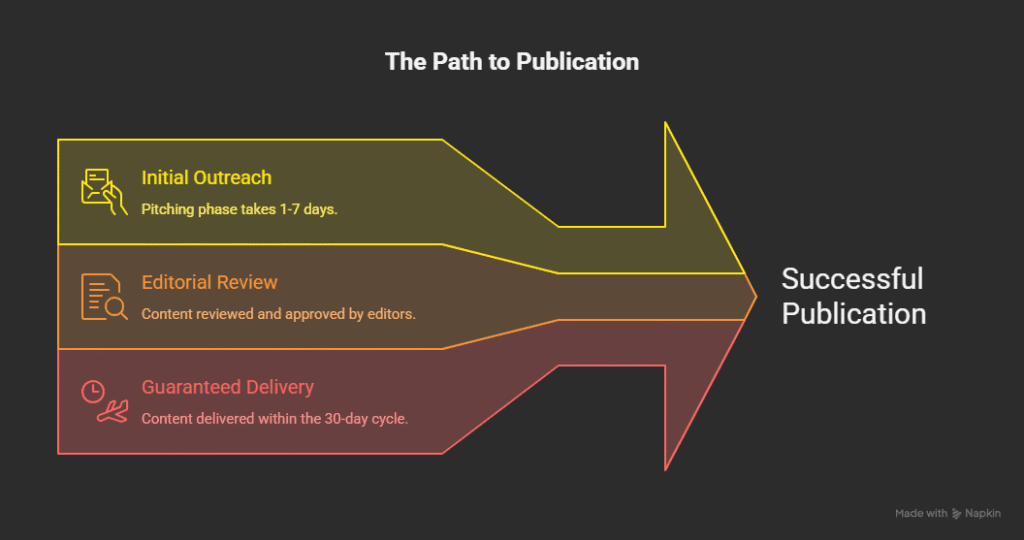
Pitch to Publication Workflow
Managing the editorial backlink process requires a clear understanding of each stage, especially the time commitment involved. A successful placement hinges on efficient communication and adherence to publication guidelines. This section breaks down the typical workflow, clarifying the timeline from initial pitch to a live link.
Our methodology focuses on a structured approach to secure editorial backlinks. These links originate from genuine content within reputable publications, offering significant SEO value. Understanding the stages helps set realistic expectations for clients regarding when their backlinks will go live.
The Pitch Process: Initial Outreach
Outreach begins with identifying suitable publications that align with the client’s niche and audience. This involves a careful analysis of content relevance and domain authority. We then craft a compelling pitch designed to capture the editor’s attention and propose valuable content.
This initial pitching phase typically takes between one to seven days. Factors influencing this duration include the publication’s responsiveness and the complexity of the proposed content. A well-researched pitch with a clear value proposition often speeds up this stage.
IOG manages the entire lifecycle of this process, from initial research to final placement. This includes selecting target publications, developing pitch angles, and handling all communication. Our goal is to streamline the pitching phase for maximum efficiency and success.
Editorial Review: Content and Approval
Following a successful pitch, the proposed content enters the editorial review stage. During this period, publication editors assess the quality, relevance, and accuracy of the submission. They ensure the content meets their specific editorial standards and audience expectations.
This critical editorial review can take anywhere from seven to twenty-one days. The exact timeframe depends on the publication’s internal processes, editorial calendar, and current workload. Larger or more prestigious publications often have longer review cycles due to their strict guidelines.
Editors may request revisions to the content to better fit their style or tone. We handle all requested edits promptly, ensuring the piece meets their requirements while maintaining the integrity of the client’s message. This collaborative effort is key to successful placement.
Securing the final approval from the publication is a significant milestone. It signifies that the content, including the embedded backlink, has met all editorial standards. This approval moves the project closer to the live placement stage.
Guaranteed Delivery: The 30-Day Cycle
IOG guarantees the delivery of editorial backlinks within a 30-day placement cycle. This commitment covers the entire workflow, from the initial pitch to the link going live. Our streamlined processes and established relationships help us meet this aggressive timeline consistently.
This 30-day guarantee helps SEO agencies and business owners set clear client expectations. Knowing a firm deadline for link acquisition allows for better campaign planning and reporting. It removes much of the uncertainty often associated with link building.
Achieving this rapid turnaround requires proactive management at every step. We continuously monitor progress, follow up with publications, and address any potential delays immediately. Our team’s expertise ensures a smooth and efficient journey from pitch to publication.
The 30-day cycle is a core component of our service, differentiating our approach to link building. It provides a reliable framework for delivering high-quality editorial backlinks on a predictable schedule. This certainty is invaluable for strategic SEO planning.
Guaranteed Replacement Policies for Failures
Failing to secure an editorial backlink within a defined timeframe can disrupt your SEO strategy, which makes understanding replacement policies essential. Professional agencies offer safeguards to protect your investment and maintain project momentum. These policies ensure that even if an initial placement attempt fails, your agency delivers the promised value.
Most reputable agencies, like IOG, operate on a risk-free ordering model for editorial backlinks. This means the agency assumes the responsibility if a link placement does not materialize as expected. This structure removes the burden of uncertainty from the client, allowing them to focus on broader SEO objectives.
The 30-Day Placement Guarantee
Agencies committed to performance typically implement a strict 30-day placement cycle for editorial backlinks. If an ordered link is not successfully delivered and published within this initial period, the agency initiates a replacement. This systematic approach aligns with the timeline expectations discussed earlier in this chapter.
IOG, for example, promises a free replacement if a link isn’t delivered within 30 days of the order. This commitment provides a clear benchmark for success and a transparent process for addressing any shortfalls. It clarifies the agency’s accountability and sets realistic expectations for clients.
What Triggers a Replacement?
A replacement policy activates under specific conditions, primarily when the initial link placement fails to meet the agreed-upon criteria or timeline. This includes instances where the target publication declines the content, the article is not published within 30 days, or the link itself does not go live. Agencies define these triggers clearly in their service agreements.
This guarantee applies to the successful publication of the editorial backlink on an approved domain. It covers both the content creation and outreach efforts required to secure the placement. Clients can track progress and easily identify when a replacement becomes necessary based on the 30-day window.
IOG’s Safety Net Promise
IOG specifically highlights its robust safety net: over 10,000 links delivered under this exact guarantee. This extensive track record demonstrates the reliability and effectiveness of their replacement policy. Such data provides concrete evidence of their commitment to client success.
This proven system allows SEO agencies and business owners to outsource their link-building efforts with confidence. Knowing a replacement is guaranteed removes a significant layer of risk often associated with editorial outreach. It transforms a potentially uncertain process into a predictable service delivery.
| Guarantee Aspect | Description | Client Benefit |
|---|---|---|
| Placement Window | 30 days from order | Predictable timelines |
| Replacement Cost | Free of charge | No additional expense |
| Trigger Condition | Link not live in 30 days | Clear activation point |
| Agency Accountability | IOG manages replacement | Reduced client effort |
Understanding the Replacement Process
Once a placement failure is identified, the agency immediately initiates the replacement process. This typically involves identifying a new target publication and creating fresh content if needed. The goal remains to secure an editorial backlink meeting the original specifications.
The agency communicates transparently during this phase, providing updates on the new outreach efforts. While the initial 30-day window resets for the replacement, the agency prioritizes a swift resolution. This ensures minimal disruption to the client’s overall SEO campaign strategy.
Benefits for Agencies and Business Owners
Outsourcing to an agency with a strong replacement policy offers significant advantages. It mitigates financial risk, as you only pay for successful placements. This model also frees up internal resources that would otherwise be spent chasing unfulfilled orders or negotiating refunds.
Moreover, these policies build trust and foster long-term partnerships. When an agency stands behind its service with concrete guarantees, it signals professionalism and a client-first approach. This assurance is especially valuable for business owners unfamiliar with the intricacies of editorial backlink acquisition.
Such guarantees also streamline the budgeting process for SEO agencies. They can confidently allocate funds for link building, knowing that the investment is protected. This allows for more precise financial planning and avoids unexpected costs from failed placements.
The Value of Professional Protections
Understanding the protections available when outsourcing to a professional agency is crucial for maximizing your return on investment. A guaranteed replacement policy is a hallmark of a reliable partner in the SEO landscape. It moves beyond simple service agreements to offer tangible security.
This mechanism reduces the overall cognitive load for clients, as they do not need to micro-manage every link placement. Instead, they can trust the agency to handle the complexities and ensure the desired outcome. This enables a more strategic focus on other areas of their digital marketing efforts.
Ultimately, a robust replacement policy ensures that the 30-day placement cycles discussed in this guide are not just aspirational but achievable. It provides a practical framework for maintaining momentum and achieving consistent results in your editorial backlink campaigns. This commitment to delivery underpins effective long-term SEO growth.
Tracking Link Longevity and Indexing
A new editorial backlink goes live, but the work does not end there. Many agencies assume placement equals impact, but this is a common pitfall. Effective SEO demands continuous monitoring to ensure your investment delivers lasting value.
International Outsourcing Group has been delivering DA60+ DoFollow editorial backlinks for 6 years with over 10,000 placements worldwide — guaranteed within 30 days or replaced free. From $399 per link, it’s the most powerful link building strategy available for SEO agencies and serious business owners. Click here to learn more and place your order.
Ensuring DoFollow Status and Indexing
The primary goal of an editorial backlink is to pass authority, known as “link juice,” to your client’s domain. This only happens if the link is a DoFollow link. A DoFollow attribute tells search engines to follow the link and consider it a vote of confidence for the linked page.
Conversely, a NoFollow link instructs search engines not to pass authority. While NoFollow links can still drive referral traffic and brand mentions, they do not contribute directly to SEO authority. Your agency must confirm that all acquired editorial backlinks are indeed DoFollow shortly after placement.
Another critical step is confirming the link’s indexing status. A search engine must discover and add the page containing your backlink to its index before that link can influence rankings. If the page is not indexed, the link effectively does not exist in the eyes of Google.
Search engines crawl the web to find new content and updates. When a page with your backlink is crawled and indexed, it becomes part of Google’s searchable database. This process allows the link to start contributing to your client’s domain authority and search visibility.
Factors Influencing Indexing Speed
The speed at which a new backlink gets indexed varies significantly. Several factors influence this timeline. The authority and traffic of the linking domain play a major role, directly impacting how quickly search engines discover and process new content.
High-authority domains with substantial traffic typically see new content indexed much faster. For example, links from domains with a Domain Authority (DA) of 60 or higher and over 5,000 monthly organic traffic tend to index rapidly. Google’s crawlers visit these sites more frequently due to their perceived importance and freshness.
In contrast, links placed on lower-tier blogs or newer websites often take longer to index. These sites may not be crawled as frequently, delaying the discovery of your new backlink. This distinction highlights why securing placements on reputable, established sites is crucial for timely SEO impact.
The freshness of the content on the linking page also matters. A link placed on a newly published article might be indexed faster than one added to an old, rarely updated page. Google prioritizes fresh, relevant content, which can accelerate the indexing process for new backlinks.
Monitoring and Verification Methods
Monitoring new editorial placements is a continuous process that extends beyond the initial 30-day placement cycle. You need robust systems to track link status, ensuring they remain live, DoFollow, and indexed. This proactive approach prevents wasted effort and ensures sustained SEO benefits.
Several tools and manual methods can help your agency track these metrics. Automated backlink monitoring tools are highly efficient for large volumes of links. These tools can alert you if a link goes down, changes to NoFollow, or if the page becomes unindexed.
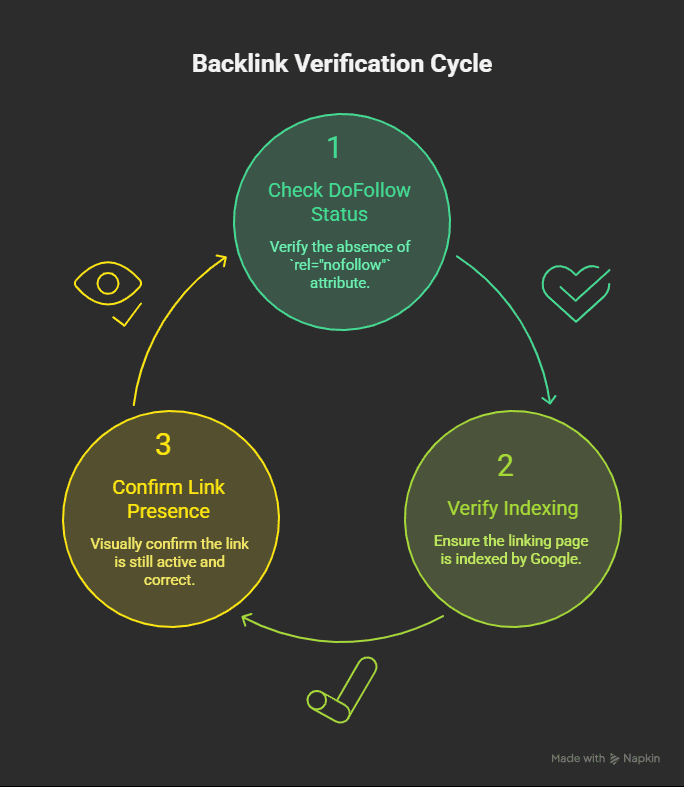
Manual Verification Steps
Even with automated tools, periodic manual verification is a good practice. This helps catch issues that automated systems might miss or provides deeper insights. Here are some steps for manual verification:
- Check DoFollow Status: Open the linking page in a browser. Right-click on the page and select “Inspect” or “View Page Source.” Search for your client’s URL and examine the
<a>tag. Confirm that it does not contain arel="nofollow"attribute. - Verify Indexing: Use Google Search Console to inspect the URL of the page containing your backlink. The URL Inspection tool will tell you if the page is indexed. You can also perform a Google search for a unique snippet of text from the linking page to see if it appears in results.
- Confirm Link Presence: Periodically visit the live page where your link was placed. Visually confirm that the link is still present and correctly pointing to your client’s website. This ensures the content has not been altered or removed.
Automated Tools for Efficiency
For agencies managing numerous placements, relying solely on manual checks is not sustainable. Investing in specialized backlink monitoring software saves significant time and reduces the risk of missed issues. These tools typically offer features like:
- Automated checks for link status (live/broken).
- Notifications if a link’s DoFollow status changes.
- Monitoring of indexing status for pages with your backlinks.
- Reporting on link acquisition and loss over time.
Popular tools like Ahrefs, Semrush, and Moz all offer robust backlink monitoring features. Integrating these into your workflow ensures consistent oversight. These platforms provide dashboards where you can track the performance and status of all your acquired backlinks in one place.
Responding to Link Issues
Despite best efforts, issues with editorial backlinks can arise. A link might unexpectedly disappear, change to NoFollow, or the page itself could become unindexed. Your agency needs a clear protocol for addressing these problems promptly.
First, identify the nature of the problem. Is the link broken, or has the attribute changed? Next, reach out to the publisher or webmaster of the linking site. Provide clear details about the issue and politely request its resolution. Maintain a professional tone and offer specific instructions if needed.
Document all communications and actions taken. This record helps track progress and serves as proof of your efforts if the issue persists. In some cases, a link might be permanently lost, which means you might need to pursue a replacement placement to maintain your client’s backlink profile.
Proactive monitoring and swift action are hallmarks of effective backlink management. By integrating these practices into your 30-day placement cycles, you ensure that every editorial backlink continues to deliver maximum SEO value for your clients over the long term.
Correlation Between High DA and Rankings
Comparing the impact of a high Domain Authority (DA) backlink to a low one shows a clear difference in SEO outcomes. Many agencies chase sheer link volume, but this strategy often yields diminishing returns. Quality, especially from authoritative domains, consistently outperforms quantity when aiming for competitive keyword rankings.
Focusing on DA60+ domains specifically helps move the needle on challenging keywords. Our internal data, gathered from over 10,000 successful deliveries, shows consistent ranking growth for clients who prioritize these high-authority placements. This approach shifts from a broad outreach effort to a more targeted, impactful link-building strategy.
DA60 + Sites Pass Great Value
One DA60+ editorial backlink can significantly outweigh the cumulative effect of ten DA20 links. This fact underscores the importance of domain authority as a key metric for predicting ranking power. The strength a high-DA site passes to your domain is simply far greater, accelerating your climb on search engine results pages.
Understanding this correlation lets SEO agencies and business owners attribute keyword ranking improvements directly to specific editorial placements. Instead of guessing which links contribute most, you can pinpoint the high-DA backlinks as primary drivers. This clarity helps refine future link-building investments and focus resources where they deliver the most impact.
The Mechanics of High DA Influence
Search engines like Google interpret backlinks as votes of confidence. A link from a site Google already trusts heavily carries more weight than a link from a less established site. This trust factor is largely what DA, a Moz metric, attempts to quantify, though Google uses its own internal metrics.
High-DA domains typically possess a long history of quality content, strong internal linking, and a clean backlink profile themselves. When such a domain links to your content, it signals to search engines that your page is also trustworthy and relevant. This signal helps your page rank higher for target keywords.
The correlation is not merely theoretical; it is observable in real-world SEO campaigns. Clients consistently see their target keywords rise in SERPs after acquiring editorial backlinks from DA60+ sources. This consistent pattern reinforces the strategy of pursuing quality over sheer volume in link acquisition.
For example, a client targeting a highly competitive phrase like “best CRM software” might struggle to break into the top 20 with dozens of low-DA links. However, a single link from a prominent tech publication (often DA70+) can propel them into the top 10 within weeks or months. This demonstrates the leverage high-DA links provide.
Practical Application for SEO Agencies
Agencies should integrate a high-DA focus into their link-building strategies. This means shifting resources from mass outreach to more personalized, value-driven engagement with authoritative sites. The goal is to secure editorial placements that naturally fit the content of the linking domain, providing genuine value to its readers.
Measuring the impact involves tracking keyword rankings before and after acquiring DA60+ links. Use tools like Ahrefs or SEMrush to monitor target keyword positions weekly. You will often observe a direct upward trend coinciding with the indexing of these powerful backlinks.
Consider the competitive landscape of your target keywords. For highly contested terms, a few high-DA links are often more effective than many lower-quality links. This is especially true for newer websites trying to establish authority in a crowded niche, where every link needs to count.
Educating clients on this correlation is also important. Explain that while acquiring DA60+ links can take more effort and time, the return on investment in terms of ranking impact is significantly higher. This helps manage expectations and justifies the strategic focus on premium placements.
Attributing Ranking Improvements to Specific Placements
To accurately attribute ranking gains, create a clear tracking system. Document the acquisition date of each DA60+ editorial backlink. Then, monitor the ranking trajectory of associated keywords in the weeks and months following the link’s publication.
Many SEO tools allow you to tag or categorize backlinks by domain authority. This feature helps isolate the effect of high-DA links from other SEO activities. You can then generate reports that specifically show ranking changes correlating with these powerful new backlinks.
This systematic tracking allows you to present clear evidence to clients. You can show a direct line between a specific editorial placement on a DA60+ site and a subsequent jump in their keyword rankings. This transparency builds trust and demonstrates the tangible value of your link-building efforts.
For instance, if a client’s “project management software” keyword jumps from position 18 to 7 after a link from Forbes (DA90+), you have a strong case for correlation. This direct attribution helps both agencies and business owners understand the true power of authoritative editorial backlinks.
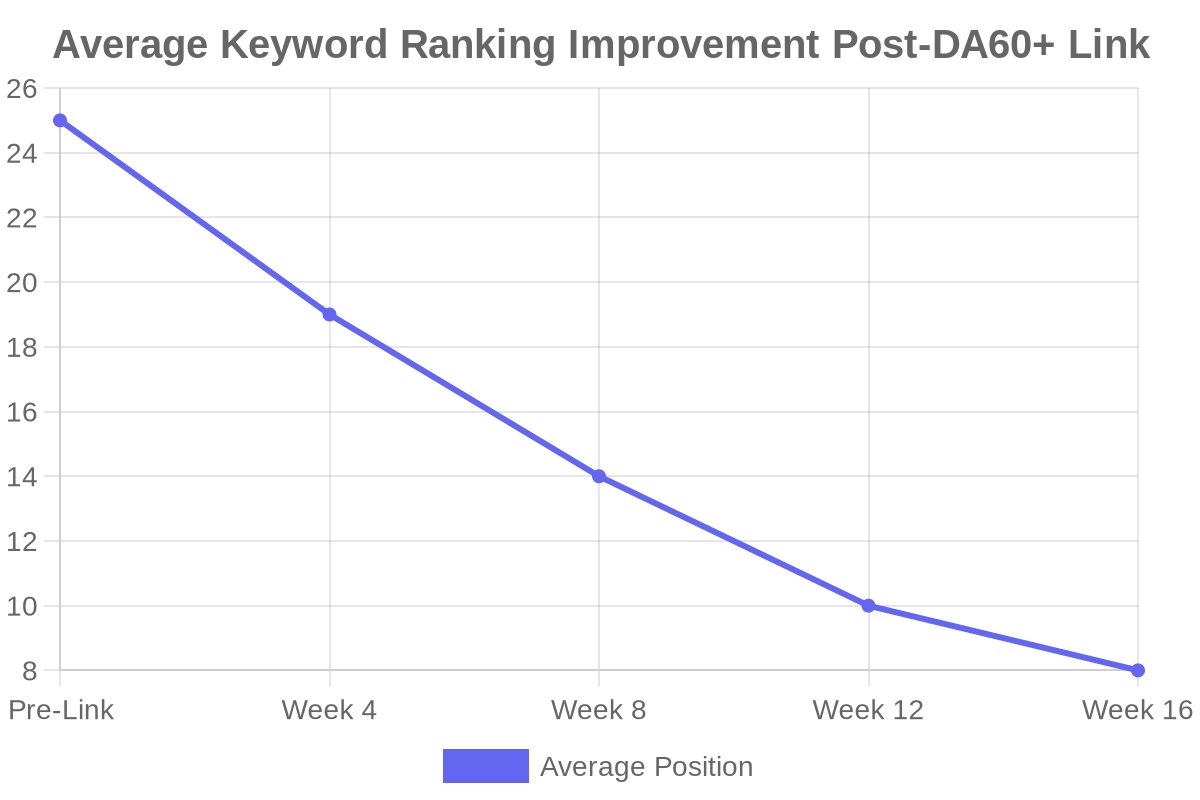
Referral Traffic and Brand Visibility
Ranking improvements are not the only benefit of high-authority editorial backlinks. These powerful links also drive significant referral traffic and boost brand visibility. Savvy agencies and business owners look beyond direct SEO gains to measure these secondary, yet crucial, outcomes.
Consider links placed on websites receiving 5,000 or more monthly visitors. These placements do more than just pass link equity; they generate actual clicks from engaged readers. This direct traffic flow introduces your brand to a new audience, which is a key advantage of editorial mentions.
Driving Direct Traffic from High-Authority Sites
Editorial backlinks on reputable sites often appear within content relevant to your niche. This placement means readers who click through are already interested in your topic. They arrive on your site with a higher intent, which often leads to better engagement metrics and conversion rates.
Measuring referral traffic is straightforward using standard analytics tools like Google Analytics. Set up custom segments to isolate traffic originating from specific referring domains. This allows you to see exactly how many visitors each high-DA backlink brings to your site.
Analyze user behavior for these referral segments. Look at metrics such as bounce rate, pages per session, and average session duration. Lower bounce rates and longer sessions from these sources indicate that the traffic is high-quality and engaged with your content.
Beyond simple traffic counts, track conversions attributed to these referral sources. Whether it’s a newsletter signup, a content download, or a product purchase, understanding the conversion path helps quantify the direct business impact of these links. This provides a clear return on investment for your outreach efforts.
Boosting Brand Mentions and Search Volume
Editorial links significantly increase your brand visibility. When your brand appears on respected industry sites, it gains credibility and exposure to a broad, relevant audience. This exposure builds brand recognition, even if a reader does not click the link immediately.
IOG’s manual outreach strategy specifically places brands in front of real readers, not just search engine crawlers. This targeted approach ensures that your brand’s name and message reach an audience genuinely interested in your offerings. The goal is to create memorable impressions that lead to future engagement.
The Data Dosn’t Lie
A substantial body of data supports the impact of media mentions on brand recognition. IOG has collected six years of proprietary data showing a consistent increase in brand searches following strategic media placements. This trend highlights the direct correlation between editorial exposure and heightened audience interest.
Measuring increased brand search volume is a key indicator of improved visibility. Use tools like Google Search Console to monitor queries for your brand name or specific product names. A rise in these branded searches suggests that more people are actively seeking out your brand after encountering it through editorial content.
Compare brand search volume before and after securing high-DA editorial links. Look for spikes or sustained growth in branded queries that align with your outreach campaigns. This correlation provides strong evidence that your editorial links are effectively boosting brand awareness.
Tracking Brand Mentions Across the Web
Monitoring non-linked brand mentions is another way to gauge visibility. These are instances where your brand name appears in content without a direct hyperlink back to your site. While they do not pass link equity, they still contribute to brand awareness and authority.
Set up alerts using tools like Google Alerts or dedicated media monitoring platforms. Track every mention of your brand, products, and key personnel across news sites, blogs, and forums. This gives you a comprehensive view of where and how your brand is discussed.
Analyze the sentiment of these mentions. Positive or neutral mentions on authoritative sites further enhance your brand’s reputation. This qualitative data complements the quantitative metrics of traffic and search volume, offering a holistic picture of visibility gains.
Evaluate the growth in social media mentions and engagement as well. Increased activity around your brand on platforms like X (formerly Twitter) or LinkedIn can often be a ripple effect of widespread editorial coverage. This extends your reach beyond direct article reads.
Holistic Measurement of Editorial Link Value
To truly understand the value of editorial backlinks, combine SEO ranking data with referral traffic and brand visibility metrics. This holistic approach reveals the full spectrum of benefits these links provide. Do not focus solely on domain authority or keyword positions.
Create a dashboard that tracks all relevant KPIs. Include organic ranking changes, direct referral traffic from specific domains, brand search volume, and non-linked brand mentions. This integrated view helps you make informed decisions about your link-building strategy.
Presenting these combined metrics to clients or stakeholders demonstrates the comprehensive impact of your work. It moves the conversation beyond technical SEO to show tangible business outcomes like increased brand recognition and direct customer engagement. This adds significant value to your services.
Long-Term Effects Of Brand Mentions
Remember that the long-term effects of brand building are cumulative. Consistent editorial placements on high-authority sites build trust and authority over time. This sustained effort reinforces your brand’s position as a leader in its industry.
Ultimately, editorial backlinks from DA60+ domains offer a dual advantage: they improve search engine rankings and simultaneously amplify your brand’s reach and credibility. Measuring both aspects ensures you capture the complete return on your investment.
Long-Term Equity and Link Juice
Editorial backlinks build a permanent SEO moat. These links are incredibly difficult for competitors to replicate. Unlike easily purchased or manipulated links, editorial placements reflect genuine authority and trust from reputable publications.
This difficulty creates a significant competitive advantage. When your rivals struggle to earn similar high-quality mentions, your site maintains a stronger, more stable backlink profile. This sustained advantage translates directly into long-term ranking stability and organic visibility.
IOG’s white-hat methods focus on building this permanent SEO moat. We prioritize ethical outreach and content strategies that genuinely earn editorial links. This approach avoids the risks associated with black-hat tactics and ensures your link building efforts contribute to sustainable growth.
Understanding Link Juice and Authority Flow
Link juice refers to the value or authority passed from one page to another via a hyperlink. When a high-authority domain links to your site, it effectively endorses your content. Search engines interpret this endorsement as a strong signal of your site’s credibility.
DoFollow links from news sites pass the highest ‘link juice.’ These links explicitly tell search engines to follow the link and pass authority. News sites, particularly those with a high Domain Authority (DA) of 60+, are seen as highly credible sources, amplifying the impact of their links.
This transfer of authority strengthens your entire domain. Over time, a consistent influx of high-quality link juice from DA60+ domains elevates your site’s overall authority score. This improved authority then helps all your pages rank better, not just the linked ones.
| Link Type | Link Juice Transfer | Replicability |
|---|---|---|
| Editorial (DA60+) | Highest | Very Low |
| Guest Post (Low Quality) | Low to Moderate | High |
| Directory Listing | Minimal | High |
| PBN Links | Variable (Risky) | Moderate (Risky) |
The Moat Effect: Sustainable Competitive Advantage
The concept of an SEO moat describes a sustainable competitive advantage in search rankings. Just as a physical moat protects a castle, a strong backlink profile from editorial sources protects your ranking positions from competitor attacks and algorithm updates.
Building this moat requires consistent effort and a focus on earned media. Earned media refers to publicity gained through promotional efforts other than paid advertising. Editorial backlinks fall squarely into this category, as they are earned through valuable content and relationships, not purchased.
Your competitors cannot simply buy their way into the same level of authority. Replicating genuine editorial placements demands similar levels of content quality, outreach, and relationship building. This barrier to entry makes your ranking positions more resilient.
Measuring Moat Strength
We can measure moat strength by analyzing the quantity and quality of unique editorial domains linking to your site versus your competitors. Tools like Ahrefs or Semrush allow you to compare backlink profiles and identify these gaps.
A strong moat shows a high percentage of links from diverse, high-authority editorial sources. Conversely, a weak moat might have many low-quality links or a profile easily replicated by simply paying for guest posts on generic blogs.
Focusing on the diversity of linking domains is also key. A broad range of editorial mentions from different news outlets, industry publications, and respected blogs signals a more robust and natural link profile to search engines.
Long-Term Equity in SEO Assets
Editorial backlinks are not temporary boosts; they are long-term assets. Once earned, these links tend to remain in place for years, continuously passing link juice and contributing to your site’s authority. This creates compounding returns on your investment.
Think of these links as equity in your digital presence. Each high-quality editorial link adds lasting value, similar to how a well-maintained property accrues value over time. This equity helps mitigate the impact of future algorithm changes or new competitors entering the market.
This enduring value is a core reason why SEO agencies and business owners should prioritize editorial link building. It moves beyond short-term ranking spikes to build foundational strength that supports sustained organic traffic and lead generation.
Impact on Brand Authority
Beyond direct SEO benefits, editorial links significantly boost your brand authority. When your company is mentioned and linked to by respected news organizations or industry leaders, it enhances your perceived credibility and trustworthiness in the eyes of your target audience.
This improved brand perception can lead to higher click-through rates, better conversion rates, and increased direct traffic. People trust brands endorsed by reputable sources. This halo effect extends far beyond just search engine rankings.
The combination of increased SEO authority and enhanced brand trust creates a powerful virtuous cycle. Stronger brand signals lead to more natural mentions and links, further reinforcing your authority and making your SEO moat even deeper.
Practical Application for Agencies and Businesses
For SEO agencies, demonstrating this long-term equity to clients is vital. Explain that the value of editorial links extends beyond immediate ranking changes. Emphasize their role in building a sustainable competitive advantage and brand trust.
Business owners should view editorial link building as a strategic investment. It’s not merely a marketing expense but an asset-building activity that strengthens their digital foundation. This perspective helps justify the time and resources required for effective outreach.
A sustainable competitive advantage through earned media is within reach. By consistently pursuing editorial backlinks from DA60+ domains, you can build a robust SEO moat that protects your rankings and drives long-term business growth.
Risk Mitigation via Manual Outreach
Google algorithm updates often send tremors through the SEO community, leaving many websites scrambling to recover lost rankings. A key strategy for avoiding these penalties involves acquiring backlinks through entirely manual methods. This approach specifically targets high-quality editorial links, which search engines value for their authenticity and relevance.
Automated link-building tools, while tempting for their speed, frequently leave a detectable link footprint. This digital signature makes it easier for Google to identify and penalize unnatural linking patterns. Such tools often blast out generic requests, triggering spam filters and raising red flags with search engine algorithms.
International Outsourcing Group has been delivering DA60+ DoFollow editorial backlinks for 6 years with over 10,000 placements worldwide — guaranteed within 30 days or replaced free. From $399 per link, it’s the most powerful link building strategy available for SEO agencies and serious business owners. Click here to learn more and place your order.
Algorithm Changes
Protecting a website from future Google algorithm changes demands a commitment to genuine outreach. This means dedicating resources to personalized communication and relationship building. The goal is to earn links based on the merit of your content, not through automated mass requests.
Consider the experience of IOG. They have consistently avoided automated tools in their link acquisition efforts. This strict adherence to manual outreach has yielded remarkable results, specifically a six-year track record without a single client penalty related to backlinks.
This impressive statistic underscores the effectiveness of a white-hat approach. It demonstrates that investing in manual, personalized outreach pays off in long-term site stability and ranking resilience. Avoiding shortcuts is crucial for any SEO agency or business owner serious about protecting their digital assets.
The Manual Outreach Advantage
Manual outreach ensures every link request is tailored and specific. Each email or message addresses the recipient by name, references their content, and explains why a link to your resource benefits their audience. This personal touch significantly increases the chances of a positive response.
This method also allows for careful vetting of potential linking opportunities. You can assess a website’s authority, relevance, and audience before making contact. This selective process guarantees that any acquired links come from reputable and high-quality sources.
Building genuine relationships with site owners and editors is another benefit of manual outreach. These connections can lead to more than just a single backlink. They can open doors for future collaborations, guest posting opportunities, and ongoing editorial mentions.
Crafting Effective Outreach Messages
Successful manual outreach starts with a well-researched prospect list. Identify websites and publications that genuinely align with your content’s niche and audience. Look for sites that have previously linked to similar topics or that frequently publish expert opinions.
Your initial contact should be concise and direct. State your purpose clearly and immediately highlight the value your content offers their readers. Avoid generic templates, as these are easily spotted and often ignored by busy editors.
Personalization Of Manual Outreach
Personalization goes beyond just using a name. Reference a specific article they published or a recent event in their industry. Show that you have genuinely read their content and understand their editorial focus. This demonstrates respect and builds trust.
Focus on offering value rather than simply asking for a link. Perhaps your resource provides additional data, a different perspective, or a more in-depth explanation on a topic they covered. Frame your request as a helpful suggestion for their audience.
Follow-up emails are often necessary, but keep them brief and respectful. One or two gentle reminders are usually sufficient. If you do not receive a response after a few attempts, move on to other prospects. Persistence is good, but pestering is counterproductive.
IOG’s team emphasizes a “quality over quantity” mindset. They prioritize securing a few highly relevant, authoritative links over a large volume of mediocre ones. This selective approach minimizes risk and maximizes the impact of each acquired backlink.
Eliminating the Link Footprint
A link footprint arises when automated tools create patterns that Google’s algorithms can detect. These patterns include sending identical email templates, linking from low-quality or irrelevant sites, or generating links at an unnatural velocity. Manual outreach specifically avoids these pitfalls.
Each manual outreach interaction is unique, making it nearly impossible for algorithms to detect a recurring pattern. The diverse nature of these interactions provides a natural and organic link profile, which Google rewards. This organic growth signals legitimate authority.
The absence of a detectable footprint is crucial for long-term SEO health. It means your website is less vulnerable to future algorithm updates designed to target manipulative linking practices. This proactive defense builds a more resilient online presence.
Consider the difference between a natural conversation and a spam call. Google aims to reward sites that earn links through genuine merit, much like a natural conversation leads to a recommendation. Automated tools often resemble spam calls, easily filtered out and dismissed.
Investing in a manual outreach strategy is a commitment to ethical SEO. It requires patience and consistent effort, but the returns are significant: a robust backlink profile that withstands algorithm changes and bolsters long-term organic visibility. This strategy aligns perfectly with the principles of white-hat acquisition.
Building a Robust, Penalty-Proof Profile
A diverse anchor text profile is another critical component of risk mitigation. Automated tools often use repetitive or keyword-rich anchor text, which looks unnatural to Google. Manual outreach allows for a more varied and contextual use of anchor text.
This diversity includes branded terms, naked URLs, generic phrases like “click here,” and partial-match keywords. A natural mix signals that links are editorially placed, not artificially engineered. This organic variation is key to avoiding penalties.
Furthermore, editorial backlinks, by their very nature, come from within the content of high-quality pages. These are not links from footers, sidebars, or directories – places often targeted by spammy tactics. This contextual placement further reinforces their value and safety.
The IOG team’s six-year penalty-free streak is a direct consequence of these meticulous practices. They understand that true authority comes from earning trust and recognition, not from gaming the system. Their methodology is a blueprint for sustainable SEO success.
For SEO agencies and business owners, adopting a manual outreach strategy is a strategic imperative. It protects client investments, safeguards website rankings, and builds a foundation for enduring online success. Embrace this disciplined approach to navigate the evolving search landscape safely.
Identifying and Rejecting Toxic Backlinks
Performing a thorough backlink audit helps protect your site from potential Google penalties. Not all backlinks are beneficial; some can actively harm your SEO efforts by signaling low quality or manipulative practices to search engines. Identifying and removing these problematic links is a critical component of white-hat acquisition.
A key safety filter employed by reputable agencies, such as IOG, involves examining a prospective linking site’s traffic metrics. We filter out sites exhibiting declining traffic or suspicious link profiles as a primary defense against toxic connections. This proactive screening prevents harmful associations.
Understanding Toxic Link Characteristics
Toxic backlinks originate from websites that display characteristics Google considers detrimental to user experience or indicative of spam. These often include sites with low domain authority, irrelevant content, or an unnatural outbound link pattern. Recognizing these traits is the first step in protecting your own domain.
One primary indicator of a potentially toxic backlink is a site with consistently low or rapidly declining organic traffic. A minimum threshold of 5,000 monthly organic visitors is a primary safety filter for evaluating potential link sources. Sites falling below this benchmark often lack real user engagement, which signals poor quality to search engines.
Another red flag is a suspicious link profile, characterized by an abundance of outbound links to low-quality or spammy domains. Such sites may be part of a private blog network (PBN) or engage in link schemes, which Google explicitly penalizes. Reviewing a site’s link neighborhood reveals these patterns.
Common Sources of Toxic Backlinks
Identifying the common origins of toxic backlinks helps agencies and business owners focus their auditing efforts. These sources often include spammy directories, link farms, and hacked websites. Each type presents distinct risks to your backlink profile.
Spammy directories are outdated platforms designed solely for link building, offering little to no value to users. Submitting your site to these directories can quickly accumulate low-quality links that damage your SEO. Avoid any directory that does not manually review submissions or offers instant approval.
Link farms are websites created exclusively to host numerous outbound links, often without any coherent theme or quality content. These sites exist purely to manipulate search engine rankings. Acquiring links from such sources triggers manual penalties from Google.
Hacked websites sometimes unknowingly host spammy links within their compromised pages. These links are typically injected by malicious actors to boost other sites. Discovering your link on a hacked site requires immediate disavowal to avoid guilt by association.
| Toxic Link Characteristic | Impact on SEO | Detection Method |
|---|---|---|
| Low/Declining Traffic | Signals low authority, potential penalty | Analytics tools (e.g., Ahrefs, SEMrush) |
| Suspicious Link Profile | Indicates link scheme participation | Backlink analysis tools |
| Irrelevant Content | Reduces topical authority | Manual site review |
| Spammy Anchor Text | Over-optimization, keyword stuffing | Backlink analysis tools |
| High Outbound Link Ratio | Suggests a link farm | Manual site review, backlink tools |
Auditing Your Existing Backlink Profile
Auditing your current backlink profile is a proactive measure to identify and neutralize existing toxic links. This process involves using specialized tools to analyze every incoming link to your domain. Regular audits are essential for maintaining a clean and healthy link profile.
Start by exporting your entire backlink profile from tools like Google Search Console, Ahrefs, or SEMrush. These platforms provide comprehensive data on referring domains, anchor text, and link metrics. Consolidating this data allows for a holistic review.
Next, evaluate each referring domain based on criteria such as domain authority, organic traffic, and relevance. Pay close attention to sites with very low traffic, especially those below the 5,000 monthly visitor threshold, as these are strong candidates for toxicity. Flag any domains that appear suspicious.
Investigate the content and purpose of each flagged website manually. Look for signs of spam, such as excessive ads, thin content, or an unnatural number of outbound links. This manual review confirms automated tool findings and uncovers subtle indicators of low quality.
The Disavow Process for Toxic Links
Once you identify toxic backlinks, the next step is to disavow them using Google’s Disavow Tool. This process tells Google to ignore specific links when evaluating your site’s authority. Disavowing links is a powerful but sensitive action that should be used judiciously.
Create a plain text (.txt) file listing all the domains or specific URLs you wish to disavow. Each domain or URL should be on a new line. For example, to disavow an entire domain, you would add “domain:example.com” to the file. Ensure the formatting is correct for Google to process it.
Upload this disavow file to Google Search Console. Google then processes your request and adjusts its perception of your backlink profile over time. The effects are not immediate, but this action prevents harmful links from negatively impacting your rankings.
Remember that the disavow tool is a last resort. Before disavowing, attempt to manually request link removal from the linking site’s webmaster. This direct approach is always preferable, as it cleans up the web and permanently removes the problematic link. However, many toxic sites do not respond to such requests.
Proactive Link Acquisition and Vetting
Adopting a proactive approach to link acquisition, coupled with stringent vetting processes, minimizes the risk of acquiring toxic backlinks. This strategy aligns with white-hat SEO principles, focusing on earning high-quality, editorial links naturally. Prevention is always better than cure in SEO.
Prioritize earning links from authoritative, relevant websites within your industry. These sites typically have strong organic traffic, clean link profiles, and produce valuable content. Such links provide genuine SEO value and enhance your domain’s credibility.
Implement a strict vetting process for any potential link opportunity. This includes checking the prospective site’s organic traffic (ensuring it meets or exceeds the 5,000 monthly visitor minimum), reviewing its backlink profile for suspicious patterns, and assessing its content quality and relevance. Never compromise on these standards.
Focus on creating exceptional content that naturally attracts editorial backlinks. High-quality guides, original research, and compelling data visualizations are prime candidates for earning organic mentions from other reputable sites. This strategy builds a robust and penalty-proof backlink profile over time.
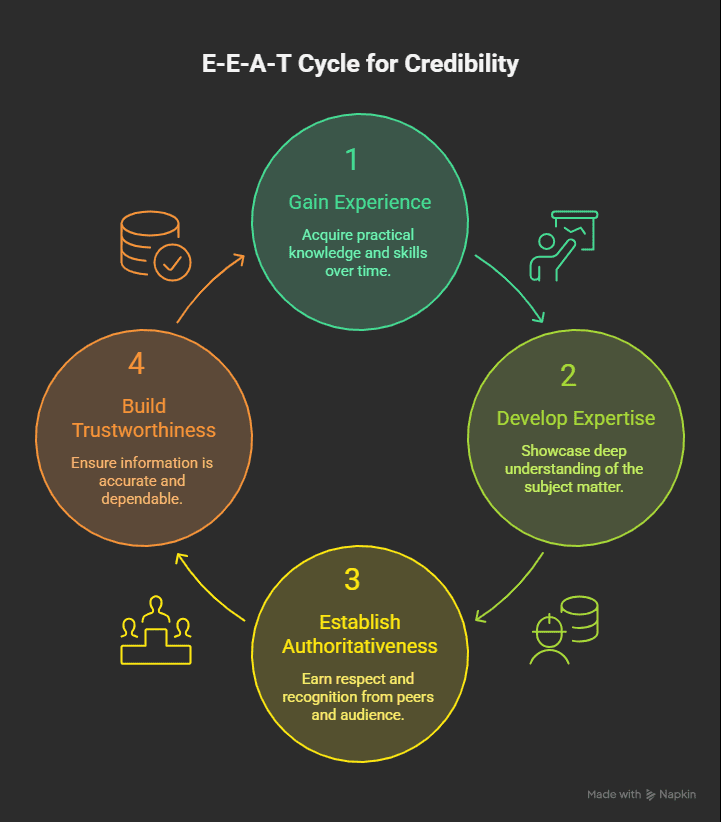
Maintaining E-E-A-T Through Expert Sourcing
Aligning your link building strategy with Google’s quality guidelines directly impacts your site’s authority and avoids penalties. Google places a high value on content that demonstrates strong E-E-A-T (Experience, Expertise, Authoritativeness, and Trustworthiness), especially for YMYL (Your Money or Your Life) topics. This means editorial backlinks must originate from genuinely expert-driven content.
Building high-quality editorial backlinks requires a clear understanding of Google’s expectations for expert content. Simply acquiring links from any site will not suffice; the linking content itself must reflect deep knowledge and credibility. This focus on verifiable expertise is a cornerstone of white-hat acquisition, protecting your SEO efforts from future algorithm updates.
Leveraging Expert-Sourcing Platforms
Reputable platforms like HARO (Help a Reporter Out) and Qwoted offer structured ways to connect with journalists and content creators seeking expert input. Using these services aligns directly with Google’s emphasis on E-E-A-T. You provide valuable insights to reporters, who then cite you as a source in their articles, creating a natural, editorial backlink.
These platforms facilitate a symbiotic relationship: journalists gain credible sources, and your business earns legitimate mentions within high-authority publications. This method is inherently white-hat because the links are earned through genuine contribution and recognized expertise, not manipulative tactics. It builds your brand’s authority organically.
Consider the practical application: a reporter writing about financial planning needs an expert quote. By responding to their query on HARO with well-articulated, insightful advice, you establish yourself as an authority. When the article publishes, your name, title, and a link to your website appear, signaling expertise to both readers and search engines.
This approach moves beyond simple link exchange or directory submissions, which often lack true editorial merit. Instead, it embeds your brand within genuinely researched and reported content. Google’s algorithms are increasingly sophisticated at discerning these authentic connections, rewarding sites that demonstrate real-world expertise.
The IOG Expert-Source Model for Authoritativeness
The IOG Expert-Source Model provides a robust framework for systematically acquiring editorial backlinks through expert contributions. This model prioritizes placing your subject matter experts (SMEs) as sources in relevant, high-authority publications. It’s a proven method for demonstrating authoritativeness and trustworthiness.
This model emphasizes that the quality of the source providing the information is paramount. Google’s quality raters are specifically trained to evaluate the credentials and background of content creators and quoted experts. Therefore, featuring your own experts, or experts associated with your brand, directly addresses this critical evaluation criterion.
Unique Expertise
In practice, the IOG model involves identifying key topics where your business holds unique expertise. You then proactively position your internal experts to contribute to articles on these topics via platforms like HARO or direct outreach to journalists. This consistent effort builds a portfolio of expert citations over time.
A significant benefit of this model is its scalability and proven track record. Our agency, for example, has delivered over 10,000 links using this exact white-hat framework. This data point underscores the effectiveness and reliability of an expert-sourcing strategy when executed correctly and consistently over time.
The volume of links achieved through this method is not arbitrary; it reflects the consistent demand for expert commentary across various industries. By becoming a go-to source, you naturally attract more opportunities for editorial mentions and backlinks, solidifying your brand’s position as an industry leader.
Aligning with Google’s Latest Quality Rater Guidelines
Google’s quality rater guidelines provide a window into what the search engine values most in content and websites. These guidelines consistently highlight the importance of E-E-A-T, especially for sensitive topics. Understanding these guidelines helps shape a link building strategy that is future-proof and penalty-resistant.
The guidelines instruct human raters to assess the expertise of the author and the overall trustworthiness of the website. When your brand consistently appears as an expert source in reputable publications, you send clear signals to both human raters and algorithmic systems that your content is authoritative and reliable.
A Core SEO Concept
One key aspect emphasized is the concept of a satisfying amount of expertise. This means not just having an expert name attached, but ensuring the content itself demonstrates deep, practical knowledge. Editorial backlinks earned through expert sourcing naturally fulfill this requirement, as your contributions are typically detailed and insightful.
Avoiding penalties means actively designing your link acquisition process around these core principles. Relying on methods that focus on genuine value exchange, like expert contributions, ensures you are building links that Google wants to see. This contrasts sharply with manipulative tactics that aim to trick algorithms, which inevitably lead to penalties.
Ultimately, a successful link building strategy integrates seamlessly with Google’s evolving standards for quality and relevance. By prioritizing E-E-A-T through expert sourcing, you not only acquire valuable backlinks but also enhance your brand’s overall reputation and credibility in the eyes of both users and search engines.
AI Content and the Value of Human Mentions
The web is changing rapidly. As artificial intelligence tools become more sophisticated, the volume of AI-generated content online will continue to explode. This shift profoundly impacts how search engines value information and how users discover credible sources.
Search engines already adapt to this new reality. They increasingly prioritize signals of trustworthiness and authority. This means content created, edited, and endorsed by humans gains significant importance. Genuine human mentions and editorial backlinks become more valuable than ever.
International Outsourcing Group has been delivering DA60+ DoFollow editorial backlinks for 6 years with over 10,000 placements worldwide — guaranteed within 30 days or replaced free. From $399 per link, it’s the most powerful link building strategy available for SEO agencies and serious business owners. Click here to learn more and place your order.
The Rise of AI-Generated Content
AI content offers speed and scale, but it often lacks originality and deep insight. While useful for certain tasks, it rarely provides the unique perspectives or nuanced understanding that human experts deliver. This distinction becomes critical for SEO.
Most search algorithms aim to serve users the best, most reliable information. If the internet fills with undifferentiated, AI-spun content, human-curated sources will stand out. They offer a tangible mark of quality that algorithms can detect and value.
Why Human Mentions Matter More
Human oversight is a powerful signal. When a reputable journalist or editor reviews and publishes content, it indicates a level of quality and accuracy. This human vetting process is something AI cannot replicate, making these mentions a gold standard.
Consider the source of an editorial backlink. A link from a site where content passes through human editors carries more weight. It suggests the content met specific journalistic standards. This directly impacts its perceived authority and trustworthiness in the eyes of search engines.
Journalists: The Ultimate Gatekeepers
Journalists at high-authority sites are crucial to future-proof SEO. These professionals act as gatekeepers, deciding what content meets their editorial standards. Their decisions elevate content, granting it a powerful endorsement.
Specifically, journalists at DA60+ sites hold immense influence. A backlink from such a domain signals exceptional credibility. It tells search engines that a trusted, human-edited platform vouches for your content. This is a clear indicator of quality.
Reaching these gatekeepers requires a specific approach. It involves building relationships and offering genuinely valuable content. This is not about automated outreach; it’s about personalized communication and demonstrating expertise.
100% Manual Outreach for Future-Proofing
IOG’s commitment to 100% manual outreach directly addresses the challenges of an AI-driven search landscape. This method ensures every interaction is personal and authentic. We target specific journalists and editors with relevant, tailored pitches.
This manual process focuses on earning genuine editorial backlinks. It means no automated tools, no generic emails, and no black-hat tactics. We build real connections, which is essential for securing mentions from reputable human editors.
Such an approach is inherently future-proof. It aligns with search engine priorities for quality, authority, and trustworthiness. As AI content proliferates, the value of human-earned media will only increase, making this strategy more effective over time.
Achieving these high-quality links requires a deep understanding of editorial calendars and journalistic needs. Our team researches publications and journalists thoroughly. This ensures our pitches resonate and provide genuine value to their readers.
Adapting SEO Strategy for an AI-Driven Search Landscape
SEO agencies and business owners must adapt their strategies. Relying solely on technical SEO or low-quality content will become less effective. The focus must shift towards earning genuine, human-validated endorsements.
Prioritize content quality above all else. Create unique, insightful content that offers real value to readers. This makes it attractive to journalists and editors looking for authoritative sources to cite.
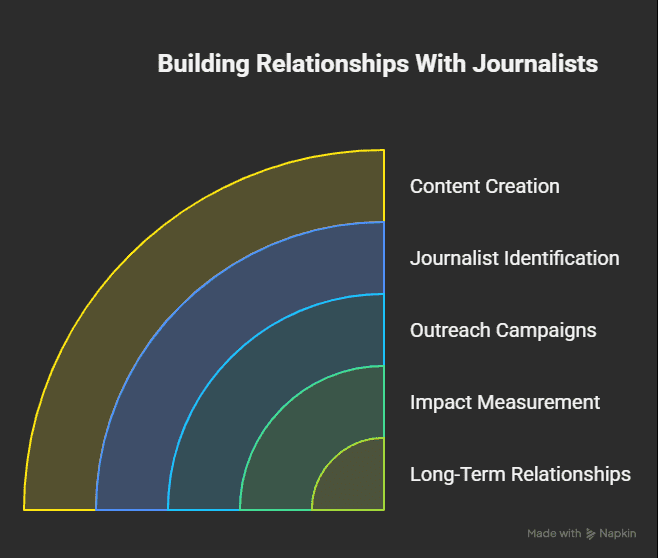
Building Relationships With Journalists
Invest in building relationships with media professionals. Networking with journalists is a long-term play. It pays dividends by opening doors to editorial opportunities and securing valuable human mentions.
- Focus on creating unique, expert-level content.
- Identify and target relevant journalists at DA60+ publications.
- Develop personalized, value-driven outreach campaigns.
- Build long-term relationships with media contacts.
- Measure the impact of editorial backlinks on organic visibility.
Embrace earned media as a core component of your SEO strategy. Editorial backlinks are not just about link equity; they are about establishing true authority and trust. This is the foundation for success in an AI-dominated search environment.
The shift towards human-validated content represents a significant opportunity. Those who embrace genuine earned media will gain a competitive edge. They will build a more resilient and effective SEO strategy for the years to come.
Integrating Editorial Links into Growth Plans
A successful SEO strategy integrates various components, moving beyond isolated tactics. This approach, often called holistic marketing, combines strong on-page SEO with high-quality earned media. It ensures all efforts work together, amplifying results rather than creating fragmented improvements.
This strategy is crucial for future-proofing your SEO, as search engines increasingly reward comprehensive online presence. By aligning content, technical SEO, and link building, businesses build a more resilient and authoritative digital footprint. This integrated view helps agencies and business owners see the bigger picture of sustainable growth.
Designing Your Growth Blueprint
Building a robust growth plan requires a clear understanding of consistent action. Our experience, based on over 10,000 links delivered, shows that consistency is the most important factor. Sporadic link building rarely yields lasting results; a steady cadence drives long-term gains and reinforces domain authority over time.
Consider the cumulative effect of small, regular efforts. Much like compound interest, consistent editorial link acquisition builds momentum, which means your site’s authority grows steadily. This approach avoids the peaks and valleys often seen with inconsistent campaigns, providing a more predictable path to improved rankings.
Maintain Link-Building Consistency
One effective method for maintaining this consistency is adopting a minimum order of two editorial links per month. This habit provides a foundational level of growth, ensuring your backlink profile continually expands with high-quality placements. This small, regular commitment creates a powerful monthly growth habit for any agency or business.
These consistent link acquisitions should be strategically paired with robust on-page SEO efforts. Optimizing your content, technical structure, and user experience maximizes the value of each incoming link. A strong internal foundation ensures that new authority flows effectively throughout your site, boosting relevant pages.
| Growth Factor | Impact on SEO | Key Action |
|---|---|---|
| Consistency | Steady Authority Gain | Minimum 2 links/month |
| On-Page SEO | Maximizes Link Value | Optimize content & tech |
| Holistic Approach | Future-Proof Strategy | Combine all efforts |
Leveraging Editorial Backlinks for Scalability
Implementing a scalable growth plan with editorial backlinks means establishing repeatable processes. IOG’s $399 links, for example, offer an accessible entry point for consistent, high-quality placements. This pricing structure helps agencies budget effectively and scale their link-building efforts predictably across multiple clients or projects.
Scalability also involves streamlining the identification of linkable assets and content opportunities. Agencies can develop internal workflows to consistently pitch relevant content to publishers. This systematic approach reduces manual effort over time, allowing for greater volume without sacrificing quality.
Training internal teams on the value and process of editorial link acquisition is another scaling factor. When everyone understands the role of earned media, content creators can proactively identify opportunities. This collective understanding makes link building an organic part of content strategy, not a separate task.
Focusing on repeatable success means documenting your outreach strategies and content types that perform best. By analyzing which pitches and content assets secure the most editorial links, you can refine your approach. This data-driven feedback loop allows for continuous improvement in your link acquisition efforts.
Connecting Earned Media to Business Objectives
Integrating editorial links into growth plans extends beyond just SEO metrics; it directly supports broader business objectives. Increased organic traffic from higher rankings translates into more leads and sales. These links also build brand authority and trust, which are invaluable assets in any market.
Consider how earned media placements can enhance your brand’s reputation. When reputable publications cite your business, it establishes you as an industry expert. This visibility attracts not only search engine bots but also potential customers and partners, reinforcing your position in the market.
Editorial Links Lead To Stronger Digital Presence
Furthermore, editorial links contribute to a stronger overall digital presence, making your brand more discoverable across various platforms. This expanded reach means your content and services are seen by a wider, more relevant audience. It creates a virtuous cycle where increased visibility leads to more opportunities for organic growth.
Tracking the impact of these links on conversion rates and customer acquisition costs provides tangible evidence of their value. By attributing specific business outcomes to your earned media efforts, you can demonstrate a clear return on investment. This data helps justify continued investment in a consistent, high-quality link-building strategy.
| Business Objective | How Editorial Links Help | Measurement Metric |
|---|---|---|
| Increase Leads | Higher Organic Traffic | Conversion Rate |
| Build Brand Authority | Reputable Mentions | Brand Mentions, PR Value |
| Reduce CAC | Cost-Effective Traffic | Customer Acquisition Cost |
| Expand Reach | Wider Audience Exposure | Traffic Source Analysis |
Sustaining Long-Term SEO Health
Maintaining long-term SEO health requires a proactive approach to link building, viewing it as an ongoing investment rather than a one-time campaign. The competitive landscape constantly evolves, so a static backlink profile will quickly lose its edge. Continuous acquisition ensures your site remains competitive and relevant.
Diversifying your backlink profile through various types of editorial placements also contributes to long-term health. Relying on a single source or type of link can be risky if that source changes its policies. A varied profile is more resilient to algorithm updates and market shifts.
Regularly auditing your existing backlinks helps identify and disavow any low-quality or spammy links that may accrue over time. This proactive maintenance protects your site’s authority and prevents potential penalties. It’s an essential part of keeping your backlink profile clean and effective.
Integrating editorial links into an overarching content strategy ensures that new content naturally attracts links. Creating valuable, shareable content makes link acquisition more organic and less reliant on manual outreach alone. This synergy between content creation and link building creates a powerful, self-sustaining SEO ecosystem.
Final Steps for Agency Implementation
Implementing an editorial backlink strategy requires decisive action. Agencies must move beyond theoretical understanding to practical execution. This transition ensures your clients benefit from high-authority links, which solidify their long-term SEO performance.
Securing high-quality editorial backlinks directly contributes to future-proofing your SEO strategy. These links are earned, meaning they come from genuine editorial mentions rather than manipulative tactics. This approach aligns with Google’s evolving algorithms, providing sustainable results for your agency and clients.
Beginning this journey starts with a clear path. Visit internationaloutsourcinggroup.com/white-hat-editorial-backlinks/ to place your initial order. This platform specializes in delivering white-hat editorial backlinks, which are crucial for building genuine domain authority and trust.
Seeking Reliable Partners
Agencies often seek reliable partners for scaling their link-building efforts. International Outsourcing Group (IOG) Brisbane offers a strong solution. They are prepared to scale with your agency’s growing needs, ensuring consistent delivery of high-quality links.
Leverage the 30-day guarantee offered by IOG. This guarantee allows you to secure your first two DA60+ links without risk. It provides a practical way to test their service and see tangible results quickly, building confidence in their delivery.
Focusing on DA60+ links from the start offers significant advantages. These links come from highly authoritative domains, passing substantial SEO value to your clients’ websites. High domain authority (DA) signals trust and relevance to search engines, which directly impacts rankings.
Earned Media Is A Mindset Shift
Transitioning to an earned media approach requires a shift in mindset. Instead of focusing on link quantity, prioritize link quality and relevance. Editorial backlinks are the epitome of quality, as they are naturally placed within valuable content.
Consider the long-term impact of these links. Editorial backlinks are inherently stable and resilient to algorithm updates. They represent genuine endorsements, which strengthens a website’s overall authority and reduces reliance on volatile SEO tactics.
Integrating this service into your agency’s workflow is straightforward. After placing your order, IOG handles the outreach and placement process. This frees up your team to focus on other critical SEO tasks, such as content creation and on-page optimization.
Eductae Your SEO Clients
Educate your clients on the value of editorial backlinks. Explain that these are not simply “links” but rather “mentions” or “citations” from reputable publications. This helps manage expectations and highlights the strategic depth of your SEO work.
The domain authority (DA) metric, developed by Moz, estimates a website’s ranking strength. A DA60+ link comes from a website with significant authority, making it a powerful signal for search engines. Aim for these higher DA links to maximize impact.
Monitor the performance of these new links. Track improvements in client rankings, organic traffic, and overall domain authority. This data validates your strategy and provides concrete evidence of success to your clients.
Genuine Media Relationships
Remember that earned media is about building genuine relationships and creating valuable content that naturally attracts attention. Editorial backlinks are a direct result of this philosophy, offering a sustainable path to SEO success.
Plan for consistent acquisition of these high-tier links. While the initial two DA60+ links provide a strong start, continuous effort is necessary to maintain momentum. Establish a regular cadence for ordering new links to steadily grow client authority.
Assess your agency’s internal capacity for link building. If resources are tight, outsourcing to a specialized provider like IOG makes strategic sense. It allows you to deliver a premium service without overstretching your team.
Consider the competitive advantage gained by using editorial backlinks. Many competitors still rely on outdated or risky link-building methods. Your agency can differentiate itself by focusing on ethical, high-quality earned media.
A Systematic Approach
This systematic approach ensures you deliver tangible value. Your clients will see their online presence strengthen, leading to increased visibility and business growth. This solidifies your agency’s reputation as a forward-thinking SEO partner.
The ultimate goal is to build a robust, resilient SEO foundation for your clients. Editorial backlinks are a cornerstone of this foundation, providing lasting benefits that extend far beyond short-term ranking boosts. Start today to secure your clients’ future success.
International Outsourcing Group has been delivering DA60+ DoFollow editorial backlinks for 6 years with over 10,000 placements worldwide — guaranteed within 30 days or replaced free. From $399 per link, it’s the most powerful link building strategy available for SEO agencies and serious business owners. Click here to learn more and place your order.
Conclusion
Editorial backlinks represent the highest form of earned media, serving as a permanent endorsement from authoritative gatekeepers that algorithmic updates cannot easily devalue. Unlike standard guest posts or paid placements, these links exist because an editor or journalist deemed your expertise valuable to their readers. This journalistic merit is the foundation of the framework developed by International Outsourcing Group over the last six years. By focusing on manual outreach rather than automated shortcuts, businesses can secure placements that survive and thrive through search engine changes.
The distinction between a “pay-to-play” link and a merit-based editorial mention is the core of long-term SEO stability. High-authority news sites and niche publications maintain strict control over their content flow to protect their own reputations. When your brand is cited as an expert source within these narratives, you gain more than just a ranking boost. You inherit a portion of the publisher’s trust, which Google measures through Experience, Expertise, Authoritativeness, and Trustworthiness (E-E-A-T). This manual has provided the technical and operational blueprints needed to navigate these high-tier environments effectively.
Author Bio
IOG’s expert team combines over 100 years of collective experience in business consulting, accounting, bookkeeping, digital marketing, SEO, and content creation. Our qualified professionals work with businesses across the globe to deliver practical insights and strategies that drive real results. We’re committed to creating content that helps business owners make informed decisions and grow their operations.